End-to-end municipal parking enforcement with an AI vision layer - five separate apps for the citizen, the officer, the authority and the administrator, from writing the ticket in the field to payment or appeal.
Role
Product · UX/UI · Full-stack
Type
GovTech · Municipal enforcement
Stack
Next.js · tRPC · FastAPI
Scope
5 apps · Hebrew RTL
What it is
Parking enforcement in Israel runs on a broken chain: the officer writes a ticket, the citizen receives paper, payment happens in another system, and appeals disappear into bureaucracy. Neither side ever sees the whole picture.
Auticket unifies the chain into one system - and adds a layer of vehicle and licence-plate recognition that turns cameras a city already owns into enforcement infrastructure.
The problem
A broken chain - Issuing, payment and appeals live in three systems
The citizen is blind - No idea what they got, why, or what the options are
The officer is on paper - No GPS, no photo, no digital signature
No BI for the authority - No picture of revenue, zones or officer performance
The solution
An app per role - Citizen, officer, authority, administrator
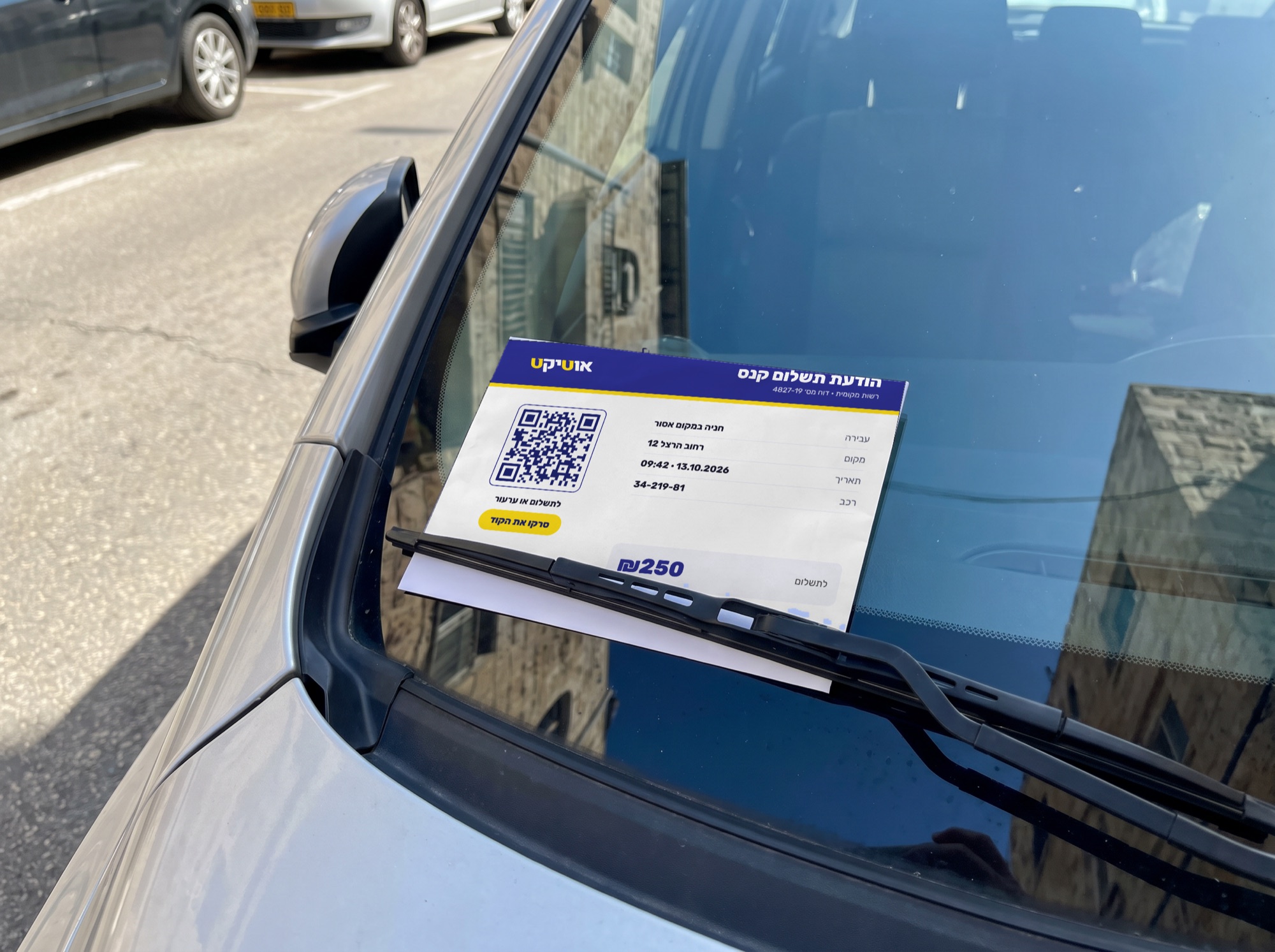
A complete digital ticket - Location, photo and signature in the field
Online payment and appeal - From the same screen that shows the ticket
AI on existing cameras - Vehicle and licence-plate recognition
Brand
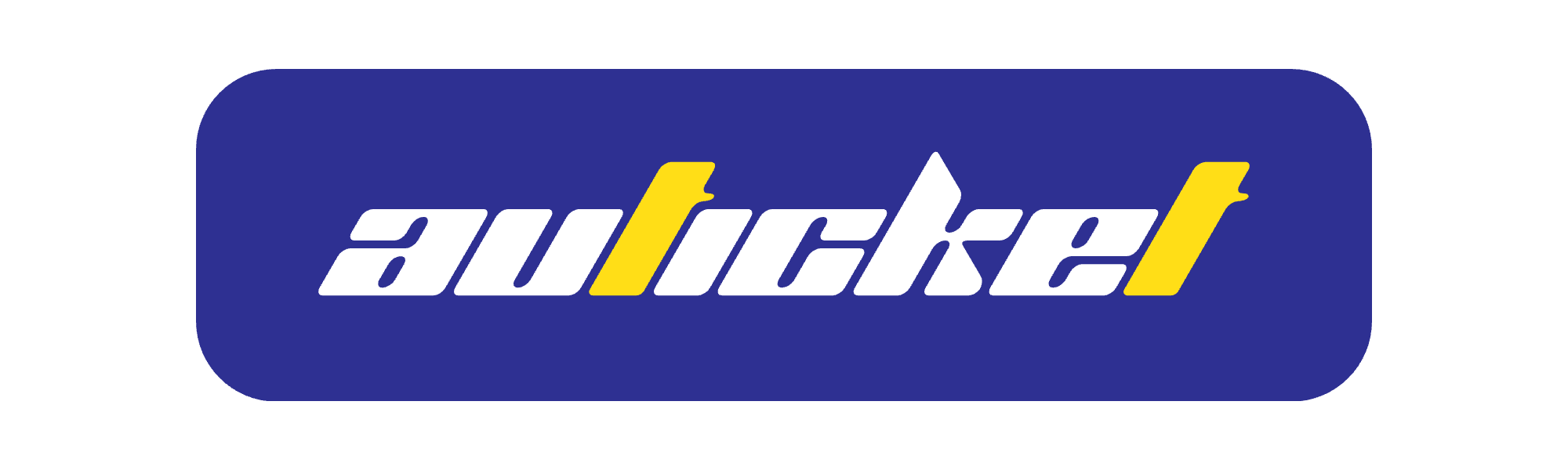
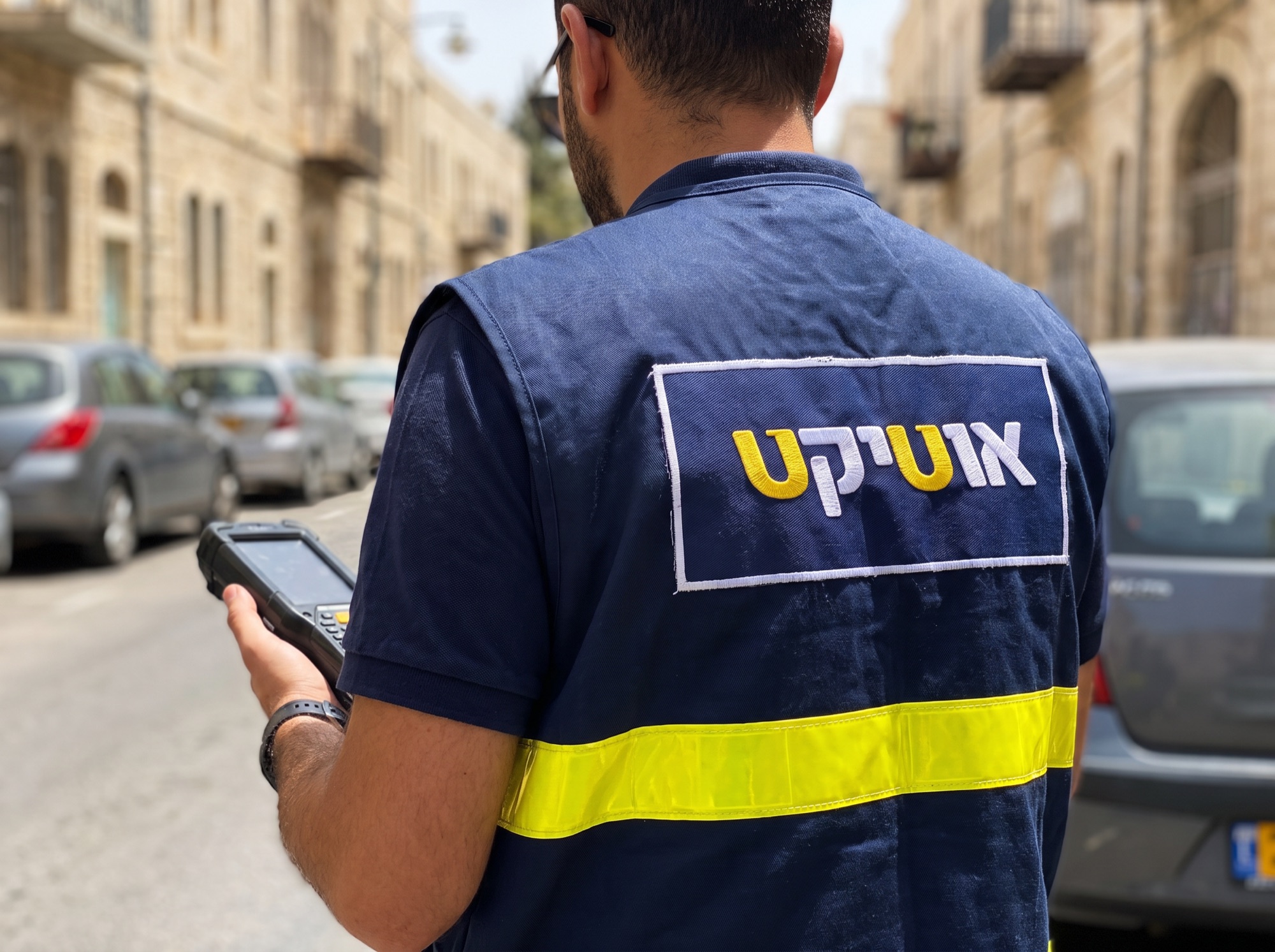
The symbol is two tickets, slanted - a yellow one and a white one on a blue tile - the thing every part of the system handles, from the officer's scan to the citizen's payment. The colours carry the brand's logic: blue for the institution and its authority, yellow only for actions - the active tab, the primary button - so two colours make a clear hierarchy in four apps.
Symbol and logotype, in black, in white and in colour. The Hebrew logotype is the one citizens see on the street.
Authority blue#2E3192 The institution, the ground
Action yellow#FFDE17 Actions only
Blue hover#1E2470 Pressed
Yellow hover#E5C515 Pressed
White#FFFFFF Surfaces
Yellow is never decoration: if it is yellow, it can be pressed.
auticketPoppinsThe brand sheet
דוחRubikThe authority app, and Hebrew
Aa 123InterThe officer's handheld app
Each app gets the face that suits its screen; the colours tie them together.
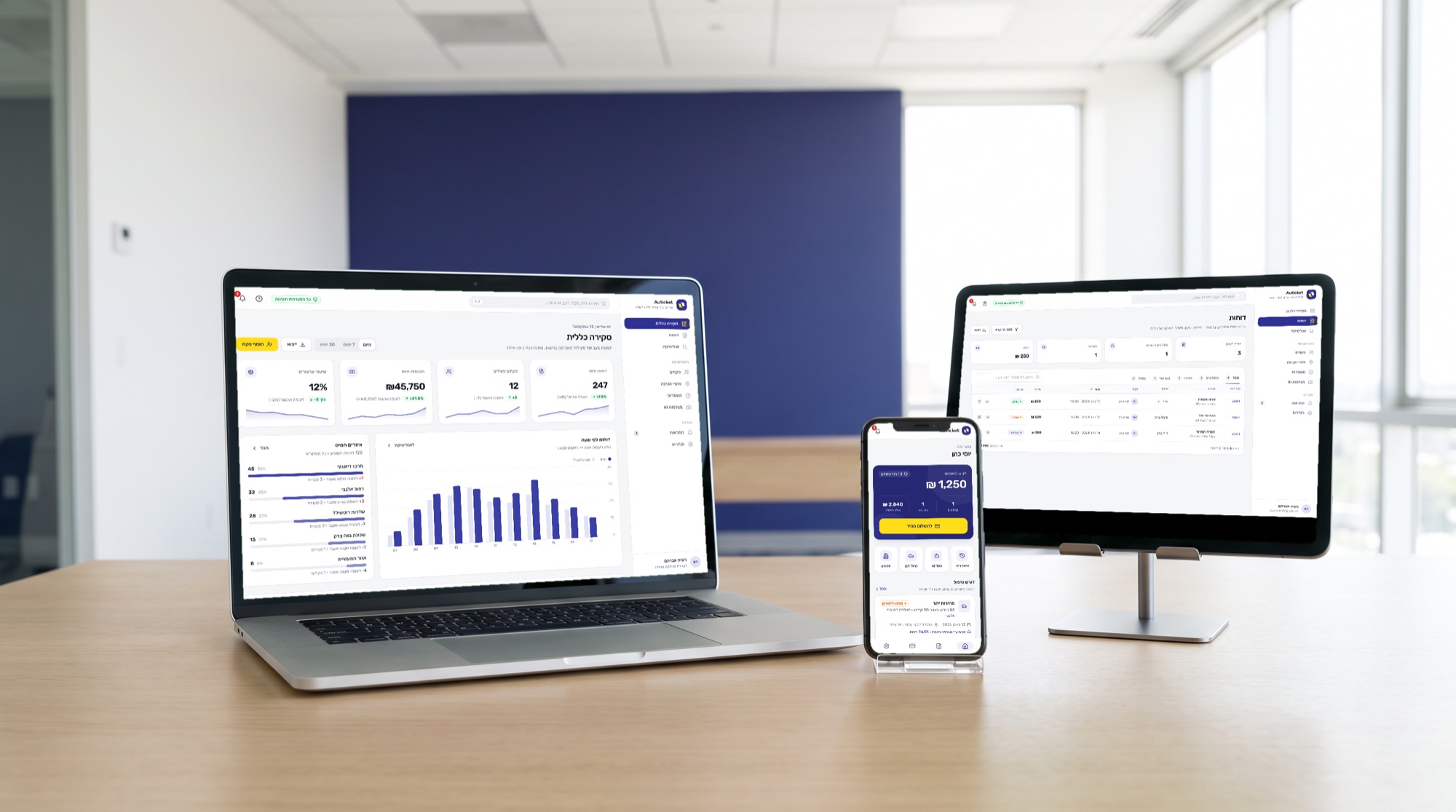
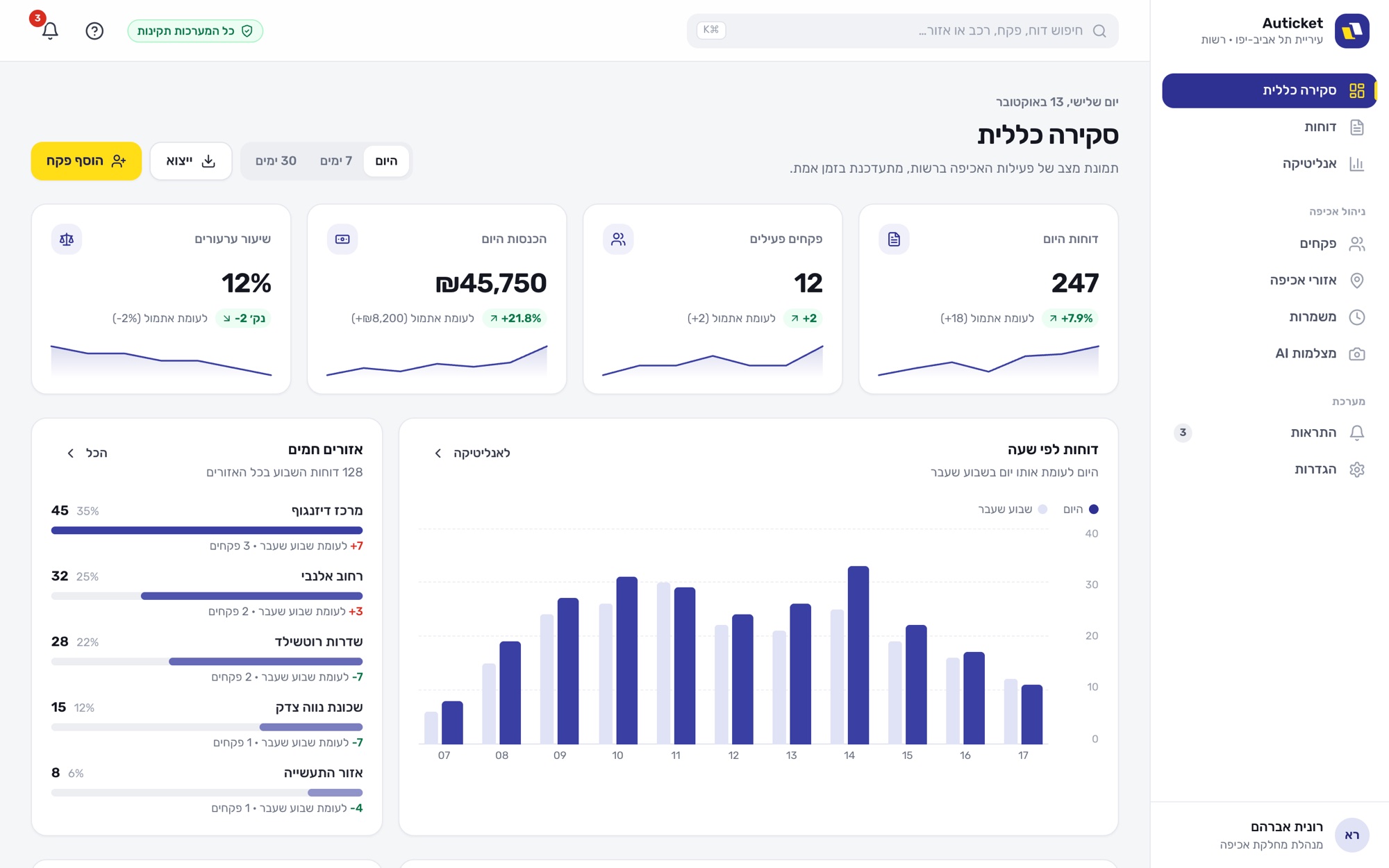
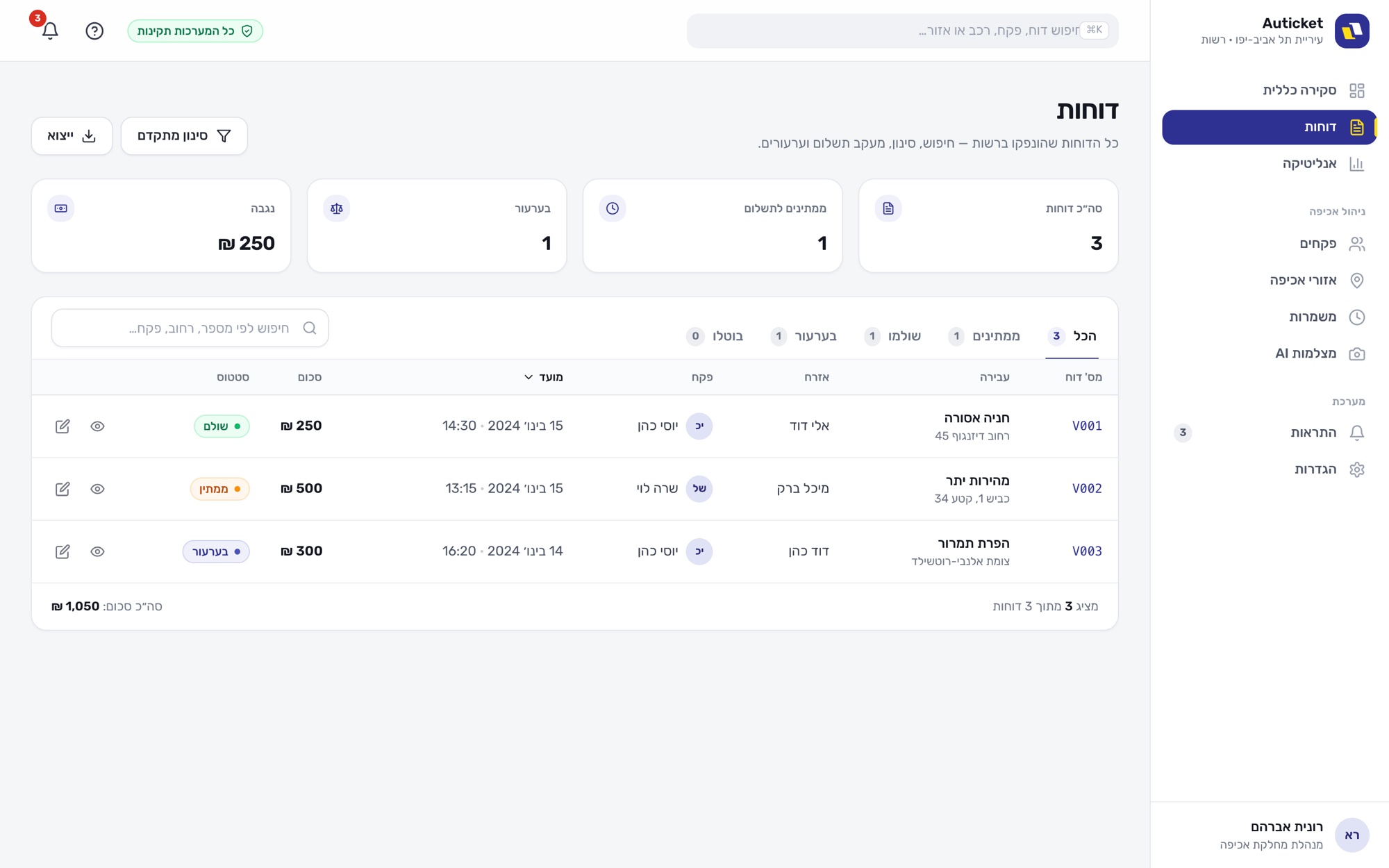
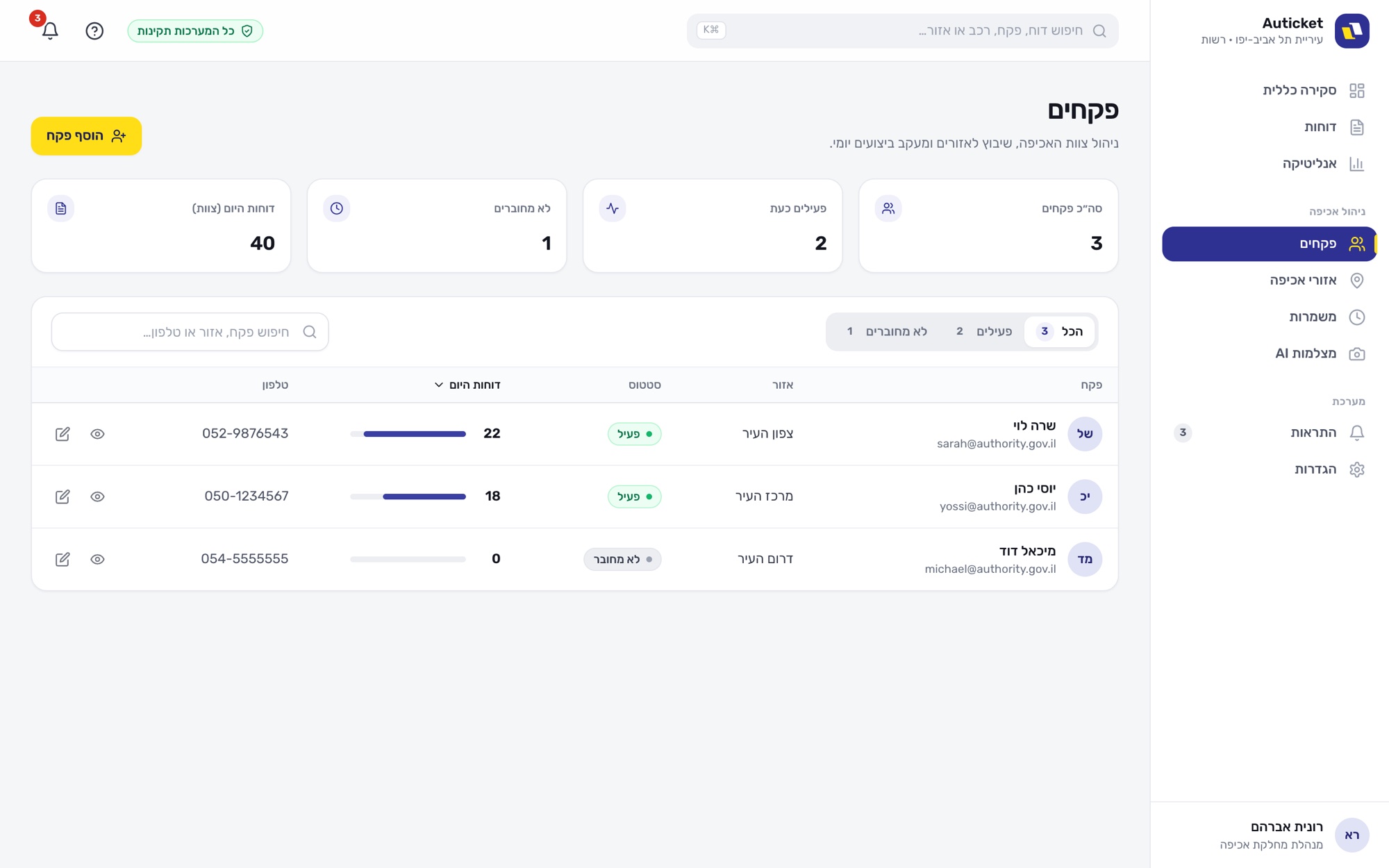
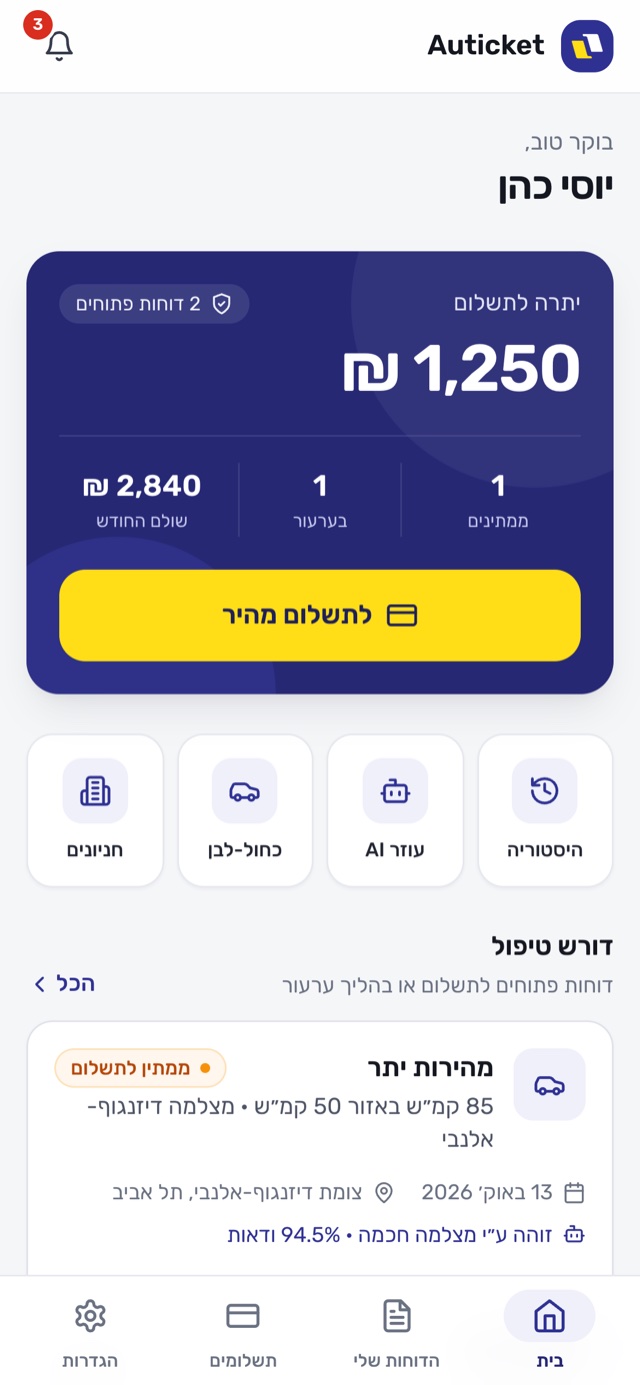
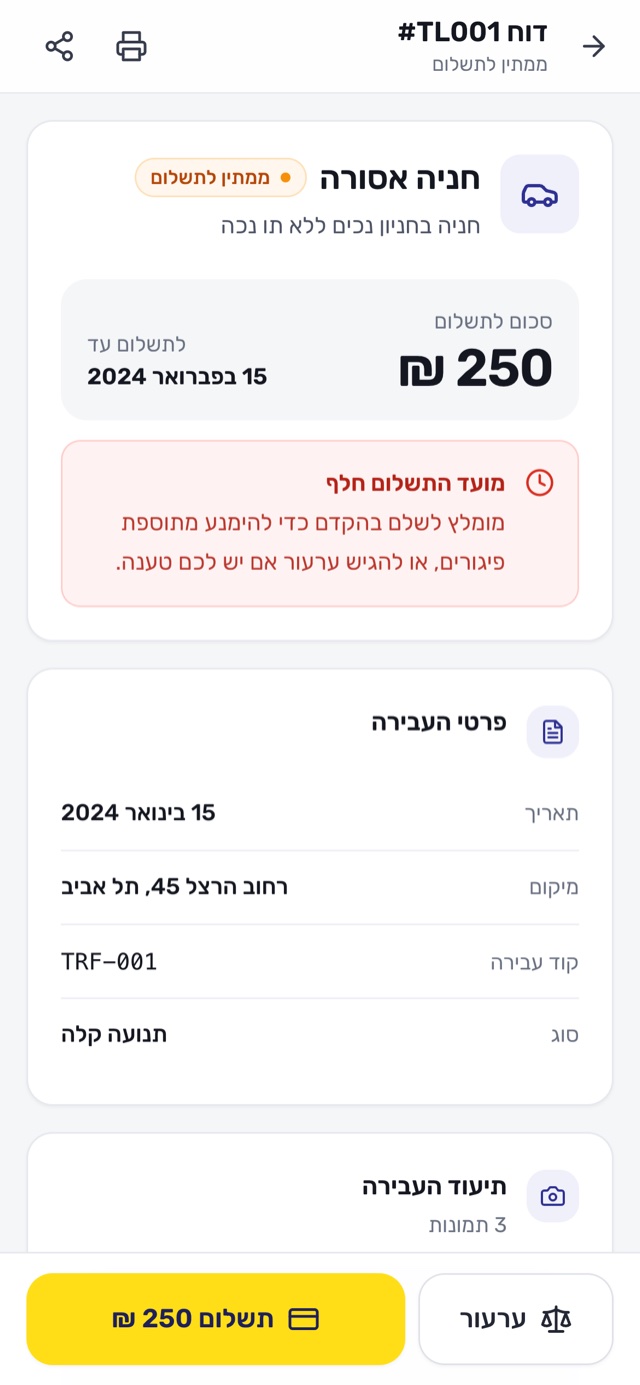
The authority dashboard, the citizen app on a tablet and on a phone - real screens
The officer's vest, the logo embroideredThe ticket, with a code to pay or appeal
How it's built
Frontend
Next.js
TypeScript · Tailwind shadcn/ui · full RTL
API
tRPC + Fastify
JWT · Bcrypt Audit trail · Rate limiting
Data
PostgreSQL
Prisma 12 related models
AI
Python FastAPI
YOLOv10 · vehicle detection licence-plate reading
The screens
Positioning
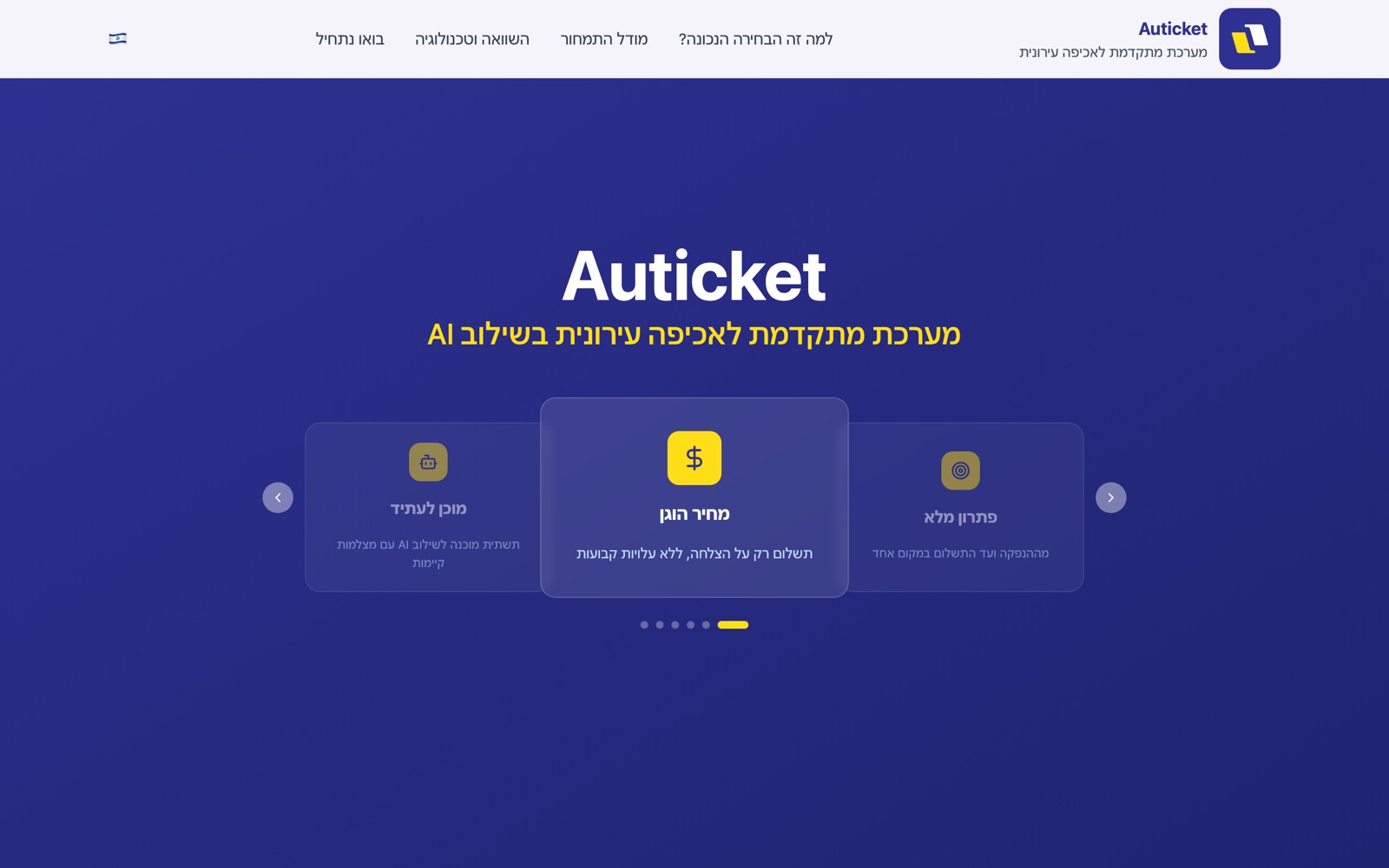
The audience here is decision-makers at a municipality, not consumers - so the message leads by removing budget risk: pay only on success, no fixed costs. The brand blue #2E3192 signals institution and authority; the yellow #FFDE17 is reserved for points of action.
The authority's dashboard
Four KPIs with their trend and a sparkline, tickets per hour against the same day last week, the hot zones, recent tickets and each officer's progress toward the day's target - one screen answers "how is enforcement going today?"
Tables you can work in
Reports and officers are proper data tables: status tabs with counts, search, sortable sticky headers, status pills and row actions, with a totals line - and they fold into cards on a phone.
Paying, for the citizen
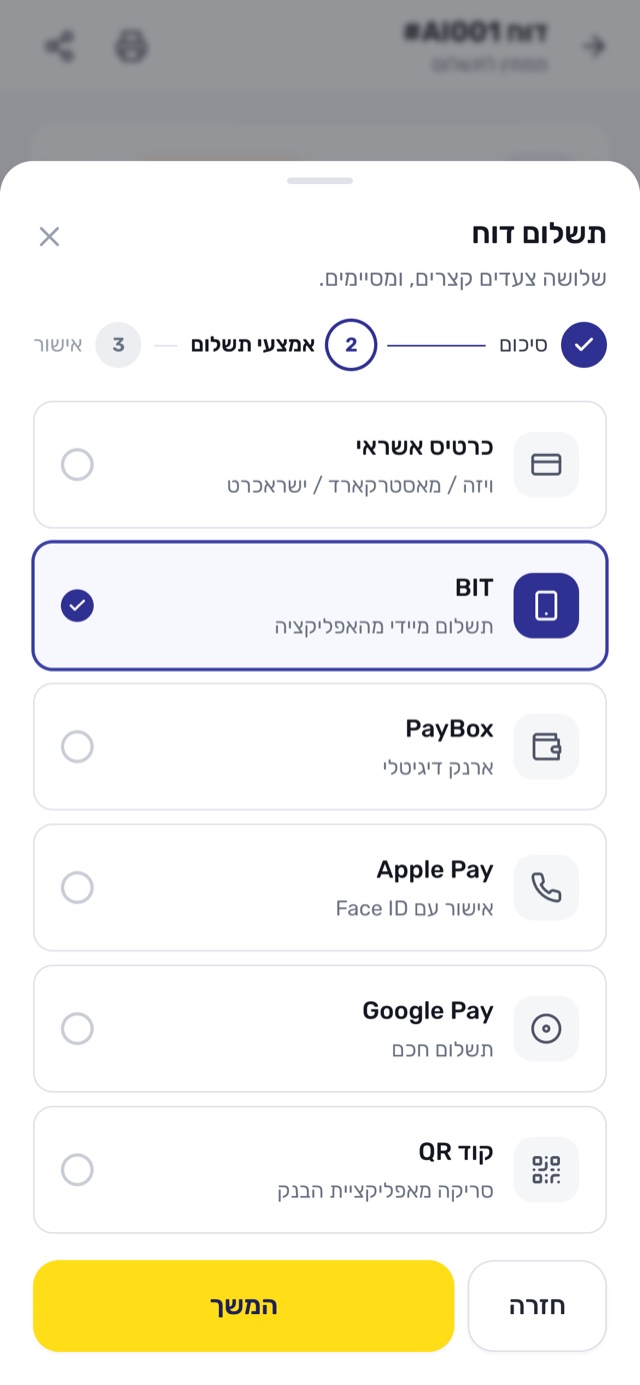
The home screen opens on what you owe and a single yellow action to pay it. A ticket page explains the offence with a sticky pay-or-appeal bar, and paying is three short steps in a sheet: summary, method, confirm.
Appealing, without a lawyer
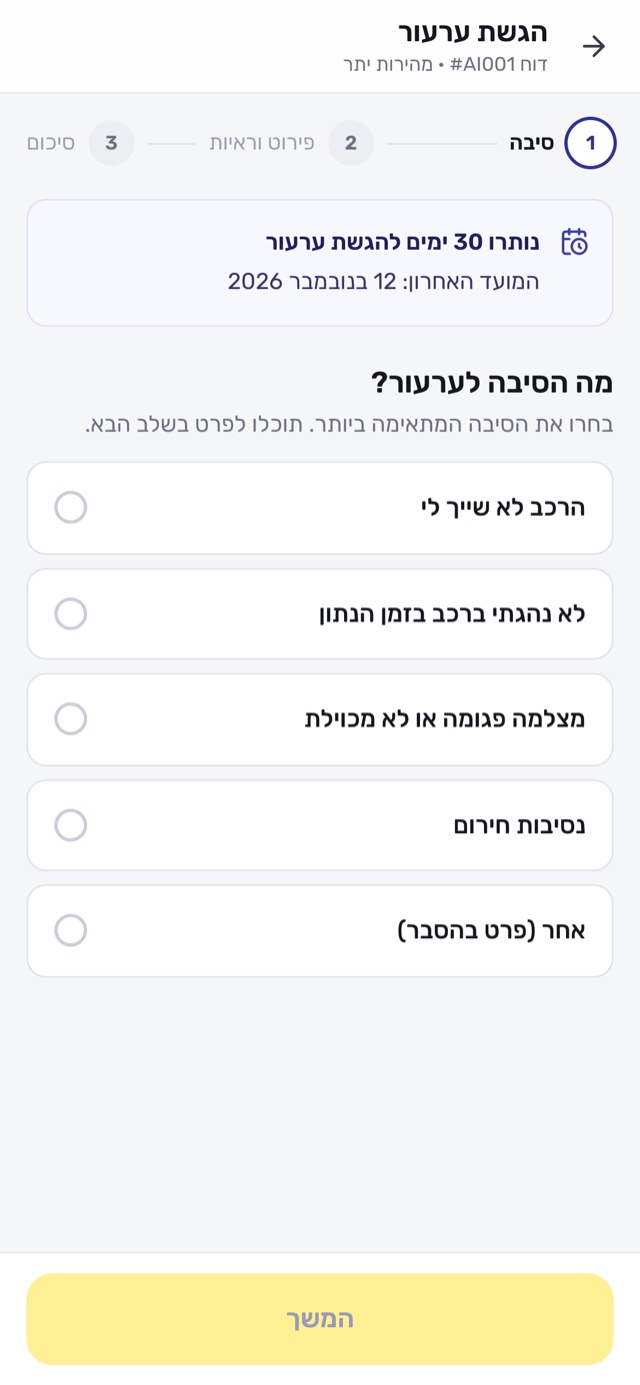
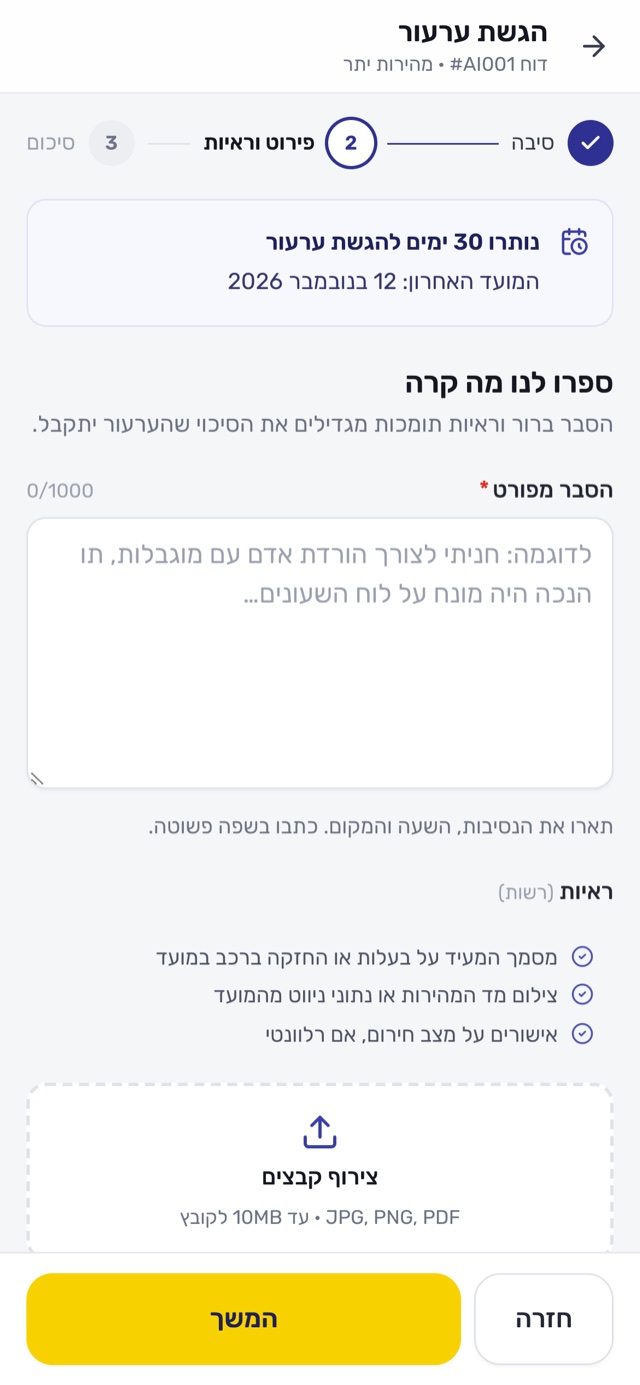
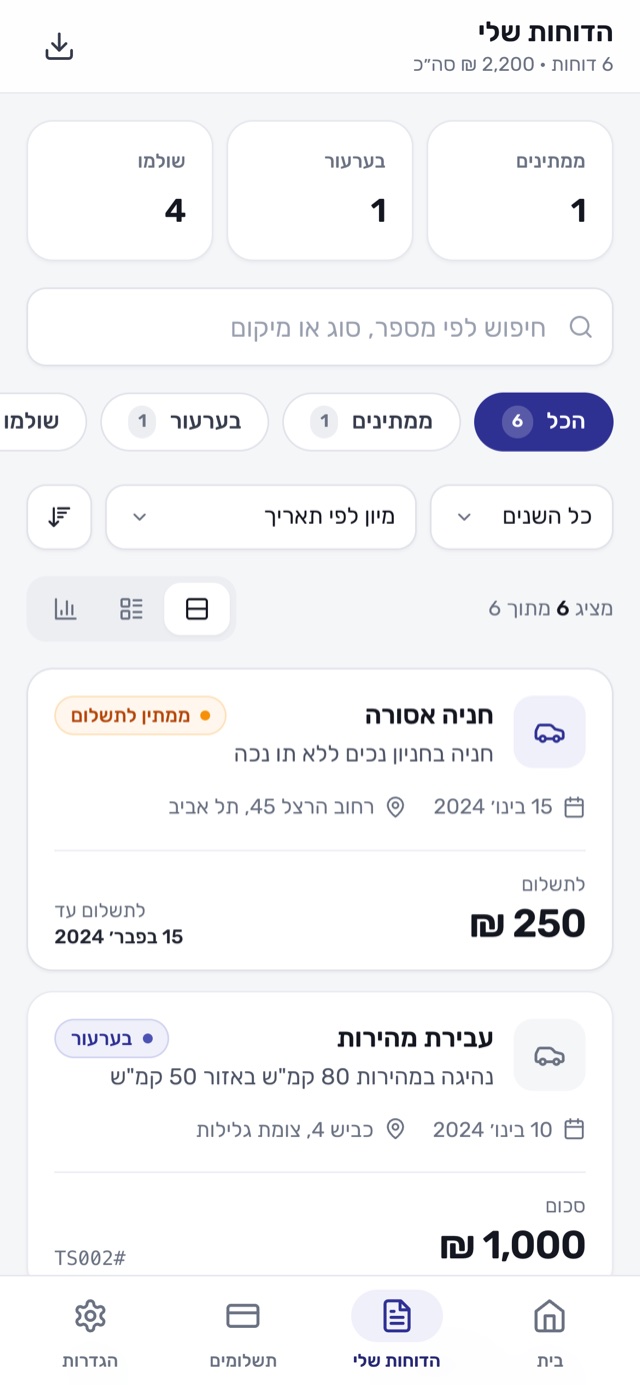
An appeal is three steps too - the reason, the details and evidence, a review - with the deadline in view the whole way. History has search, filters and views, so a citizen always knows where each ticket stands.
The officer, one-handed
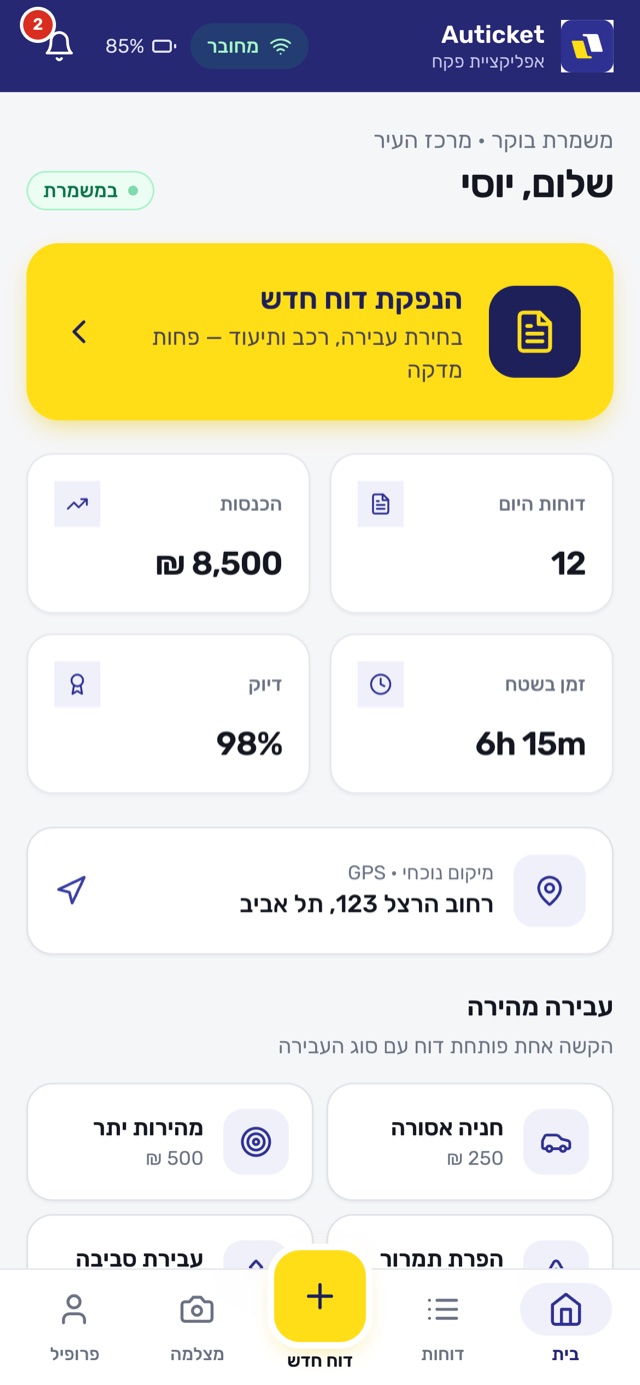
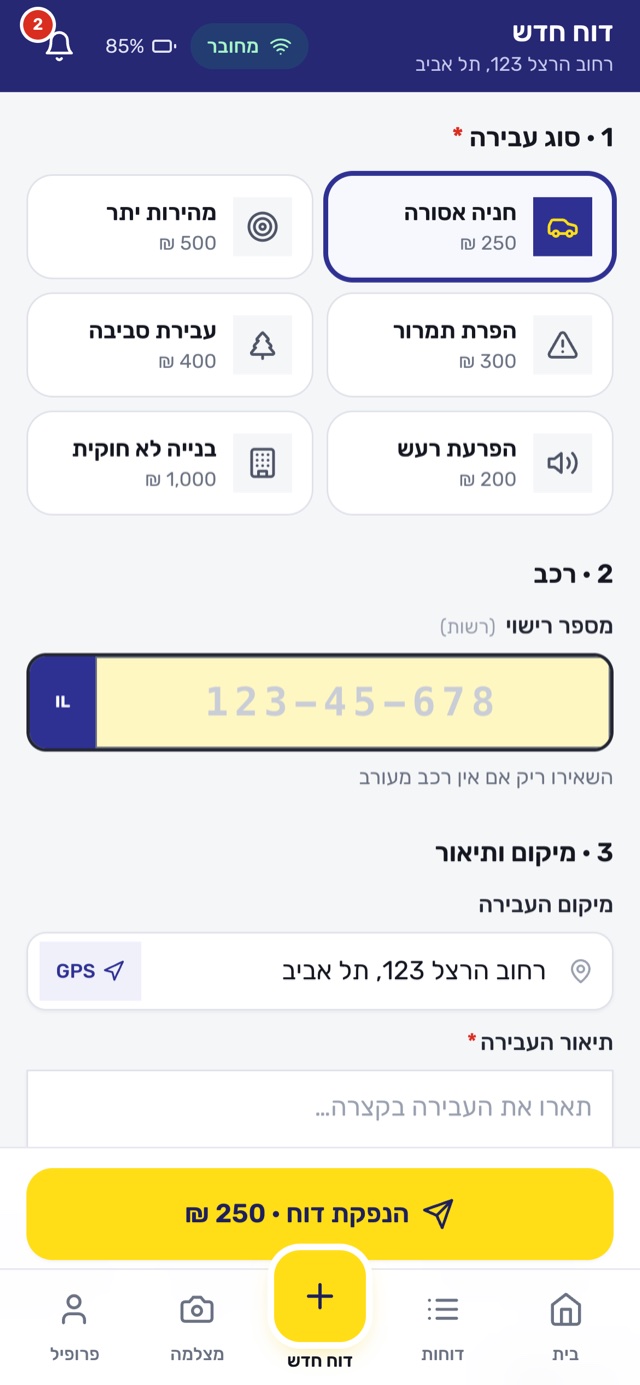
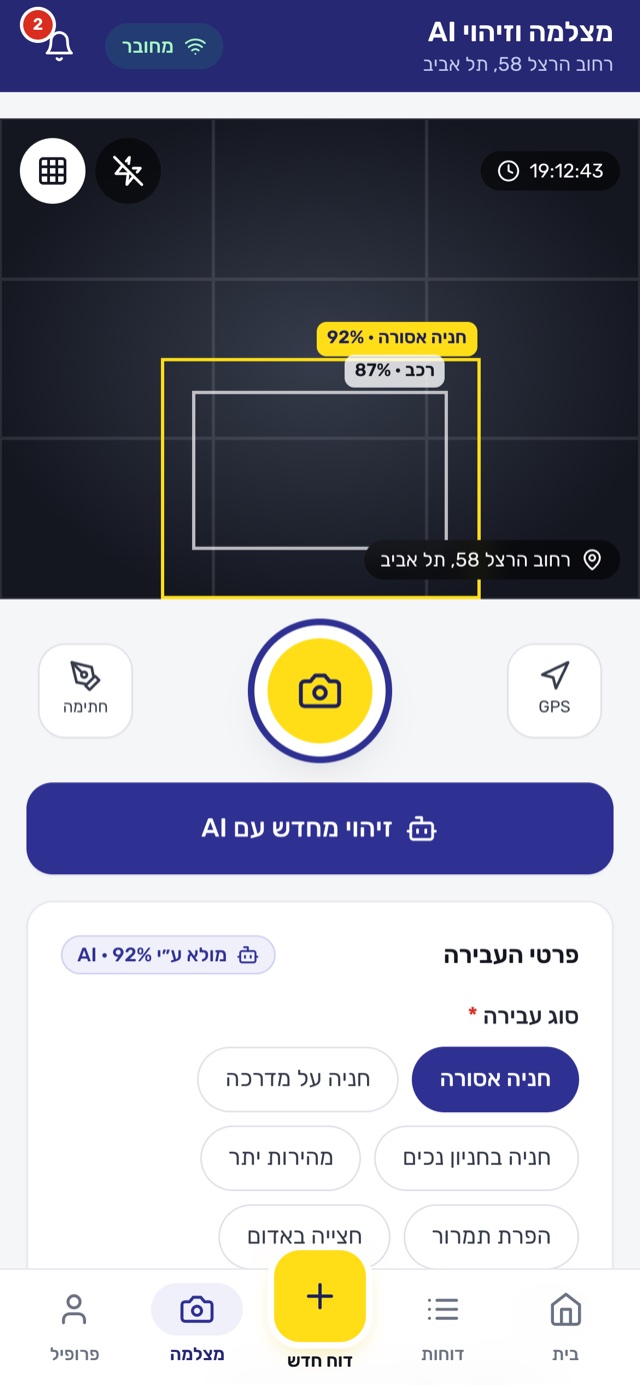
A big button to issue a ticket, today's numbers and the GPS location. The issue flow is large type tiles, a licence-plate input and a sticky issue · amount button; the camera puts the AI's detection boxes and the shutter within thumb reach.
Design decisions
01
One language, four roles - The same design system runs across every app. An officer who moves into a management role doesn't learn a new product - they get more permissions.
02
The appeal isn't hidden - In most enforcement systems the appeal is buried. Here it's an equal-status action to payment, which reduces frustration and call-centre volume.
03
Hebrew RTL by default - Not a translated Latin interface. Layout, icons and reading direction were built right-to-left from the start, including numbers and currency.
04
Yellow only for action - Blue carries institutional authority; yellow is reserved for the active tab and the primary button. Two colours produce an unambiguous hierarchy.
05
AI on existing infrastructure - Rather than requiring new hardware, the vision layer connects to cameras already installed in the city - shortening the sale and lowering the budget barrier.
06
Audit trail built in - Every ticket carries location, time, officer and signature. In a world where any ticket may reach a court, documentation isn't a feature - it's a precondition.