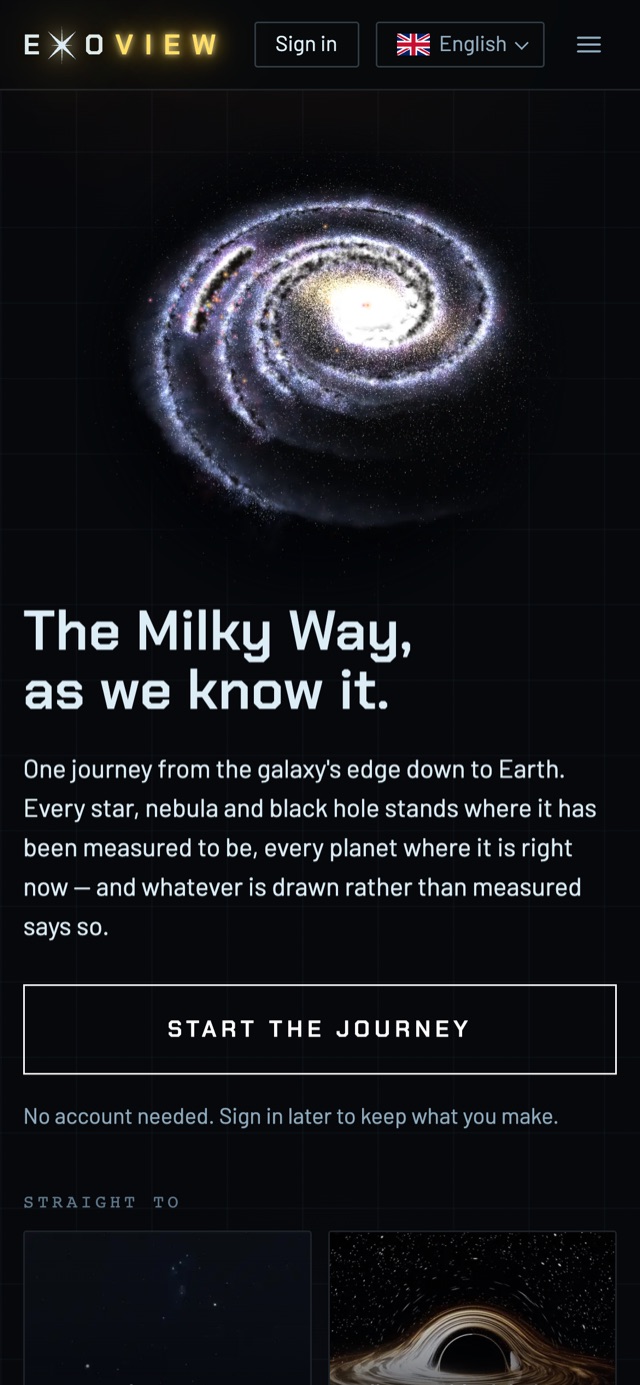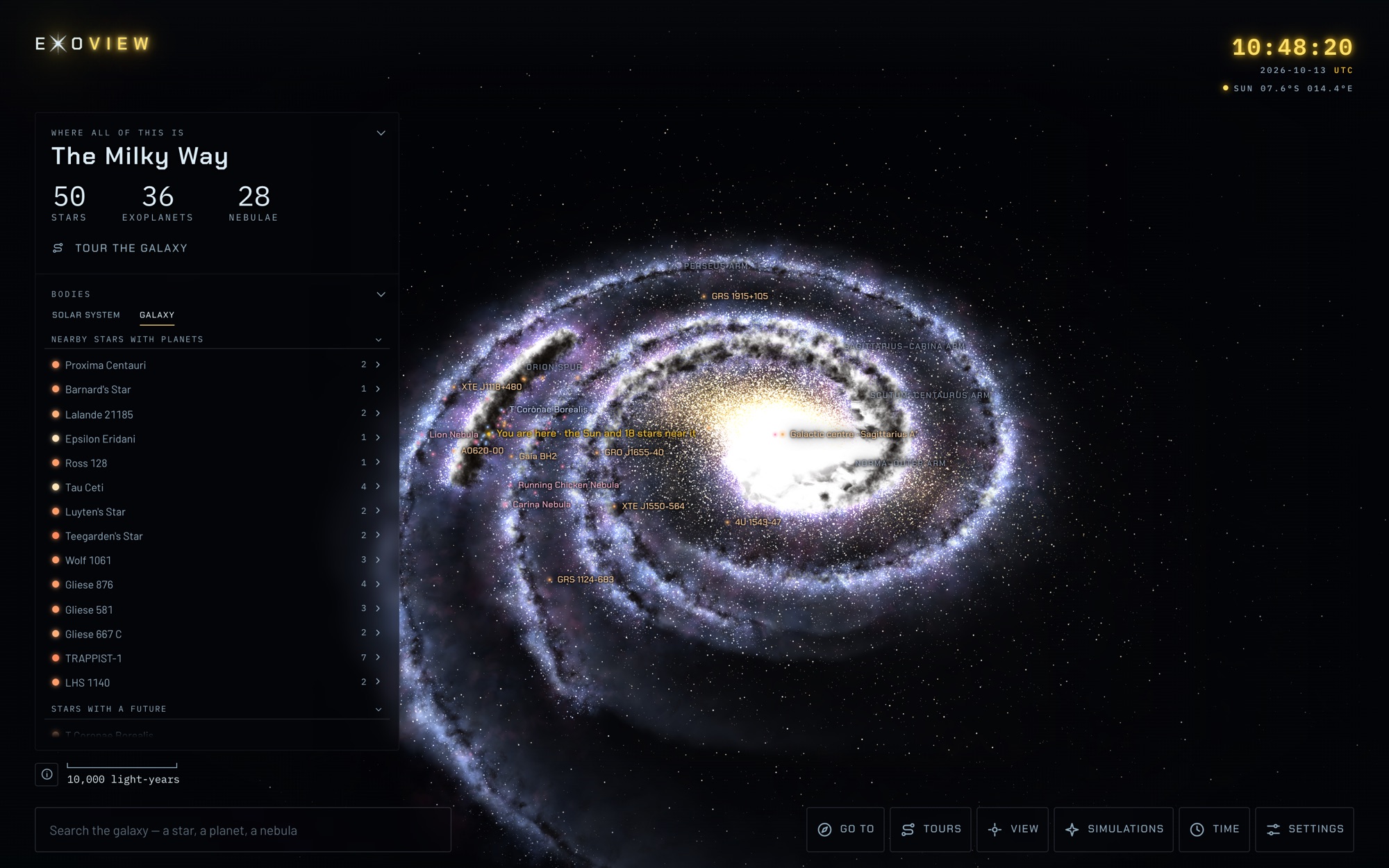
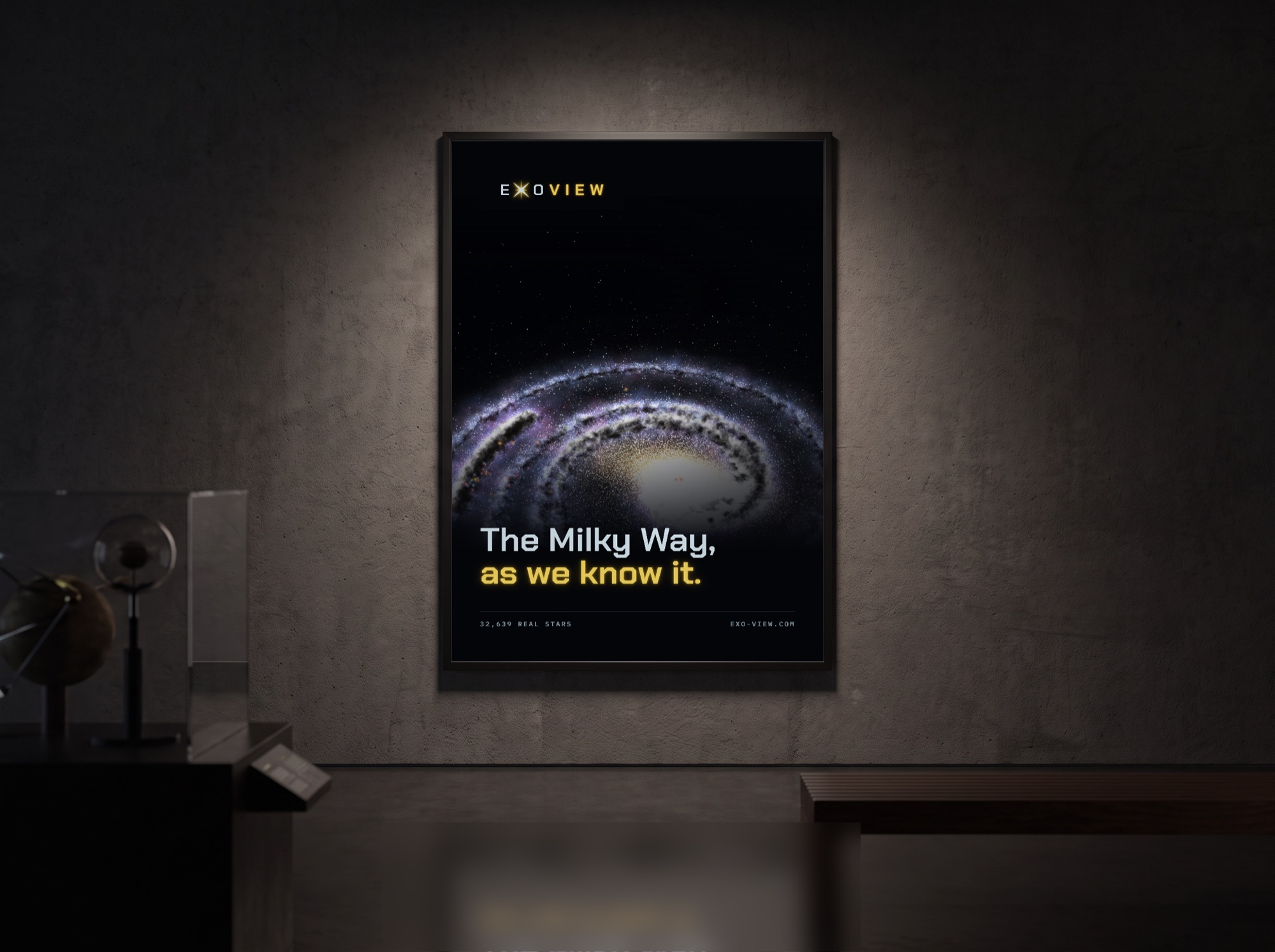
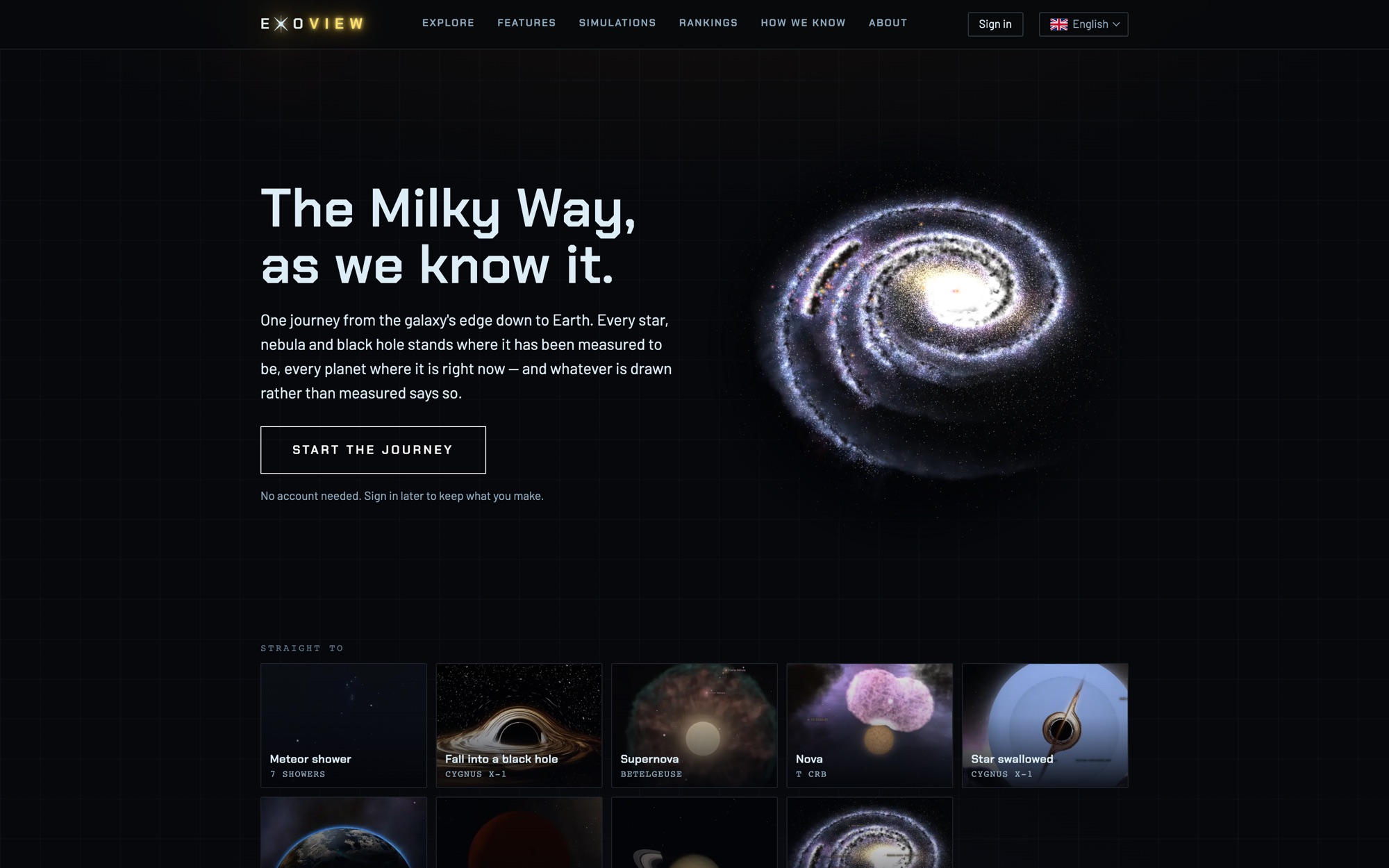
The Milky Way, as we know it - one journey from the galaxy's edge down to Earth. Every star, nebula and black hole stands where it has been measured to be, every planet where it is right now, and whatever is drawn rather than measured says so.
Short vertical films for Instagram and TikTok, each a single flight recorded in Exo-View itself - from the galaxy's edge to a star, a planet or a black hole. Every reel has a link that opens the site at exactly what it shows. Tap one for sound.
Nobody has ever seen the Milky Way from outside - we live inside it. Exo-View puts what we do know into one continuous space you can fly through: 32,639 real stars from the Hipparcos catalogues, 28 nebulae, 19 black holes, then down through the solar system with every planet and moon at its position for this moment, past the probes and telescopes we have sent out, to the Space Station and some sixteen thousand working satellites round the Earth - where every country can also be ranked by the figures you choose.
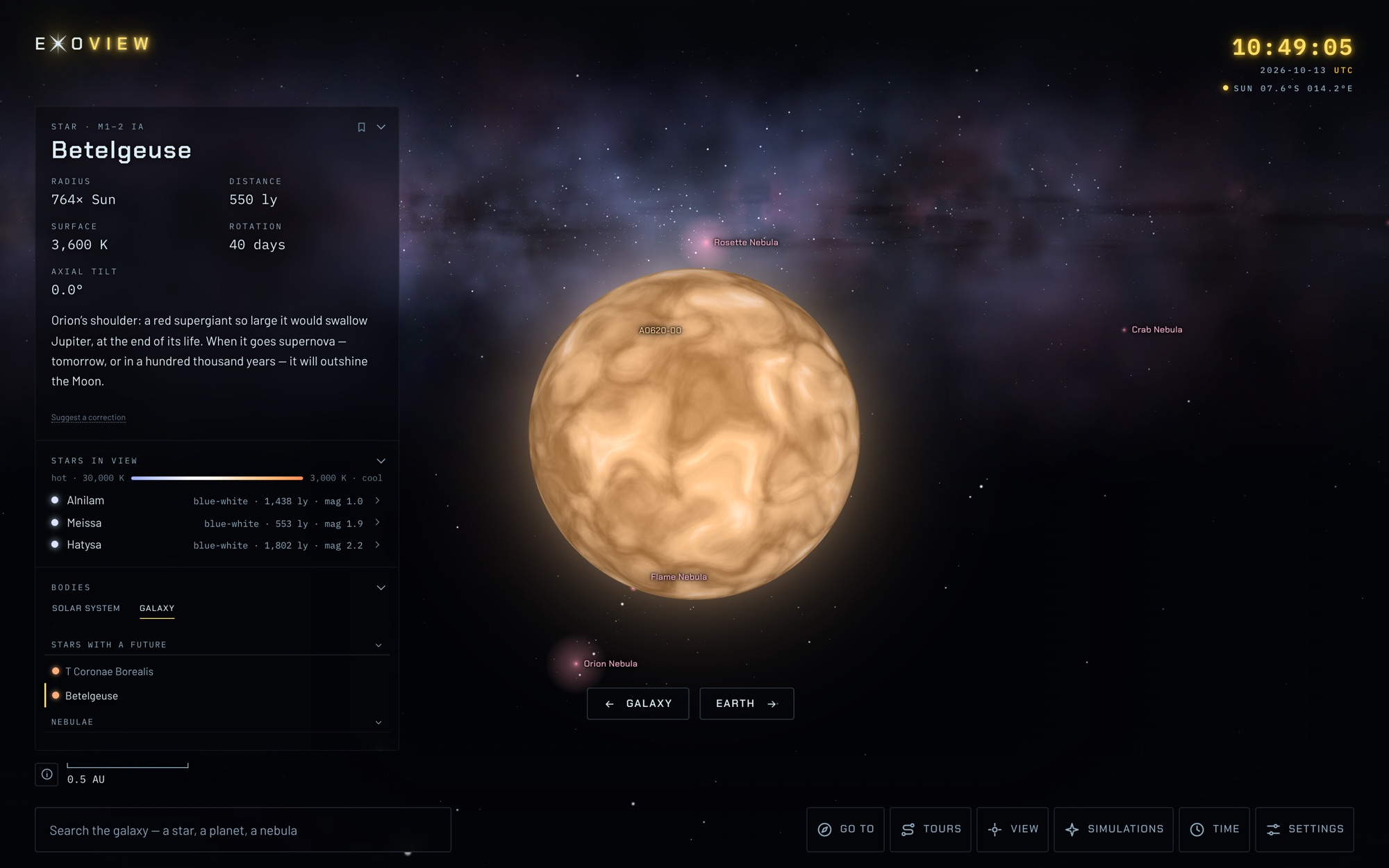
The product's rule is honesty about what kind of knowledge each thing is. Every place is marked as measured (star positions, planet orbits, distances), worked out (how light bends round a black hole, when the next eclipse falls) or drawn (the galaxy seen from outside, the shape of a nebula) - and the card says which.
It is free and opens on any screen with no account; signing in is offered, never forced, and only keeps what you make. Every view is a link that opens exactly there, and each subject - where the Space Station is, the planets tonight, a meteor shower, a black hole - also has its own page to read, in six languages, so people find it from a search. Every card ends with a way to suggest a correction.
The name is the idea: a view from outside. The mark makes the X a star - a thick X for the light's diffraction spikes, crossed by a fine + whose vertical needle is the longest, the way a bright star looks through a telescope. The star works on its own as the symbol; in the logotype it sits in the word as a letter, the same white as the E and the O, lit from behind.



Symbol and logotype, in black, in white and in colour. Only the colour version glows - the light belongs to the screen.
One palette, dark only: the chrome reads as hardware around a bright planet, and the single warm colour is spent on what is live.
Hebrew is set in IBM Plex Sans Hebrew; the logotype stays Latin in every language.
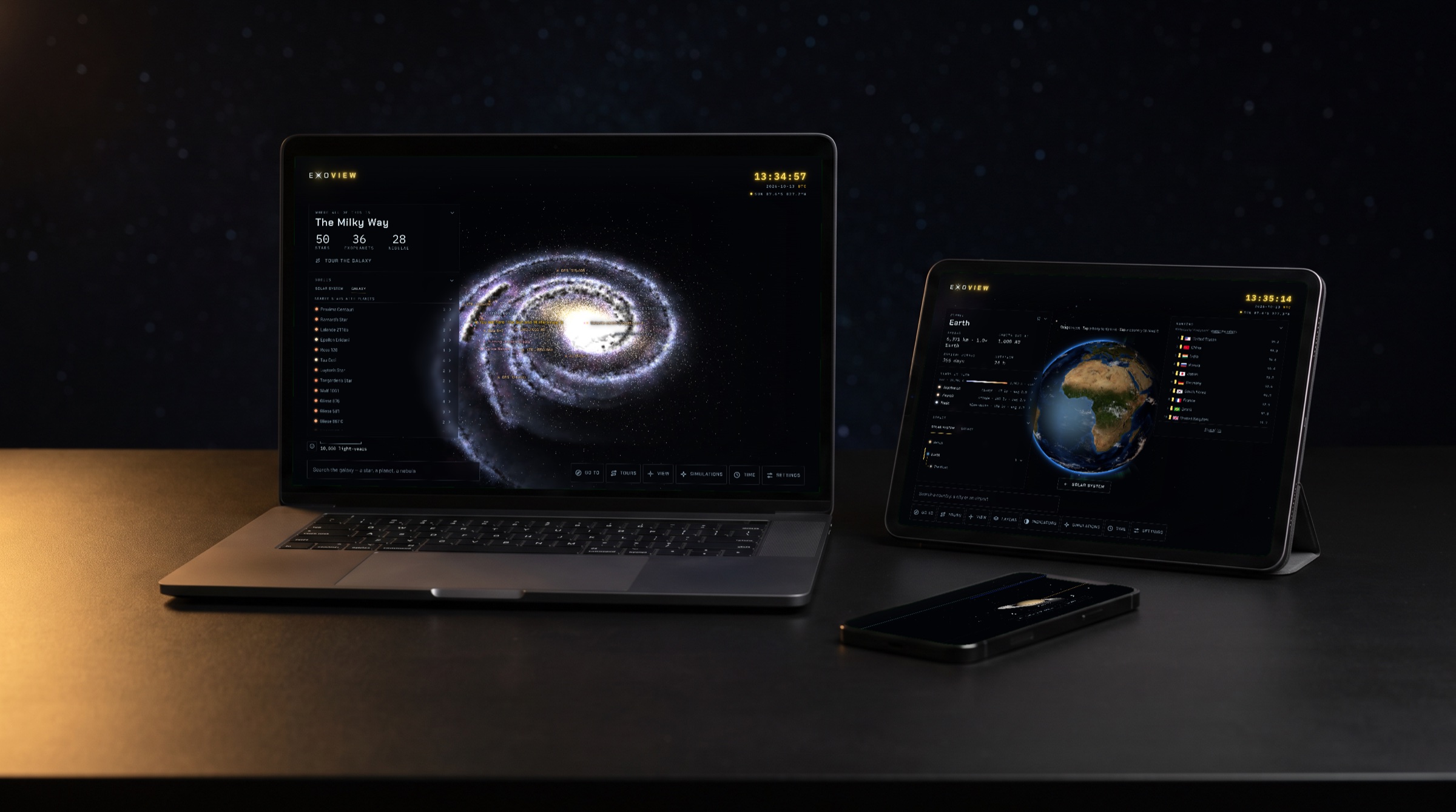

The landing is the product, already running: the Milky Way turning behind one line and one button, with the simulations one tap away. No account needed - and before you start it tells you how we know what we're about to show you.
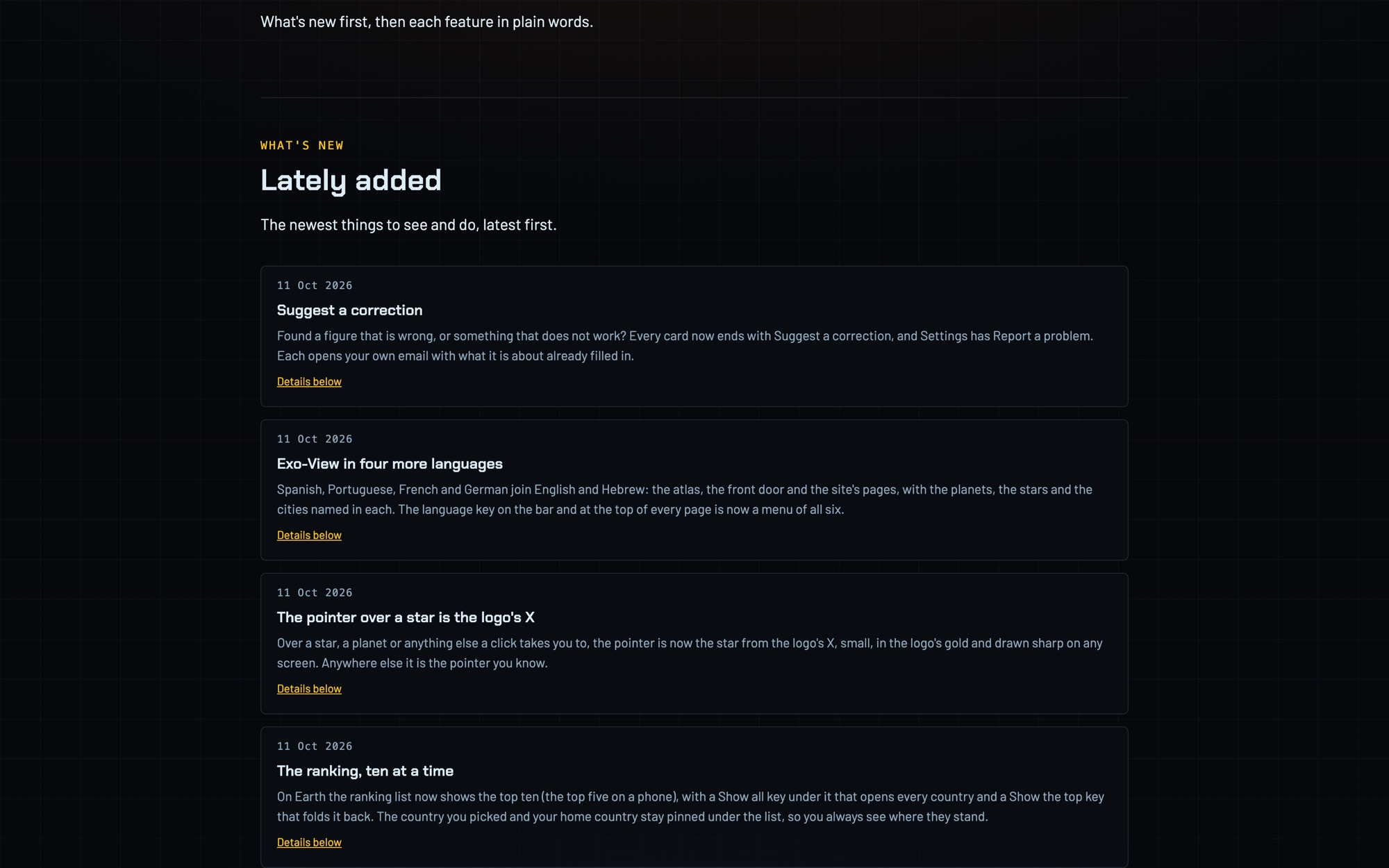
Around the 3D atlas sits a site of plain pages - explore, features, simulations, rankings, how we know and about - in six languages. The features page opens with Lately added: the newest things to see, dated and latest first.
Nebulae are faint traces from home and only drawn whole when you fly to them; a black hole is ray-traced, its disc bent over and under it. Each card says plainly when something is drawn from the figures - no photograph exists.
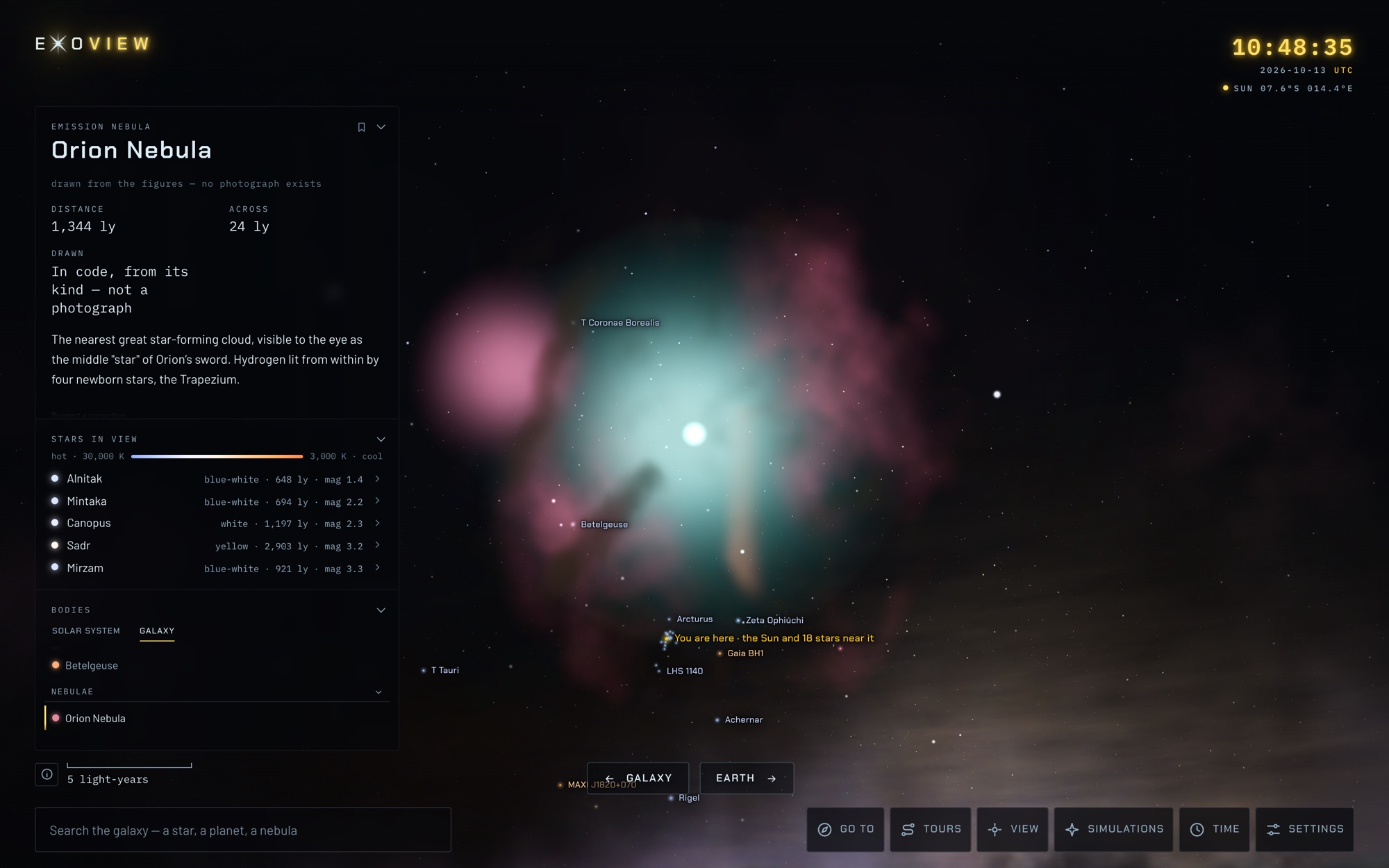
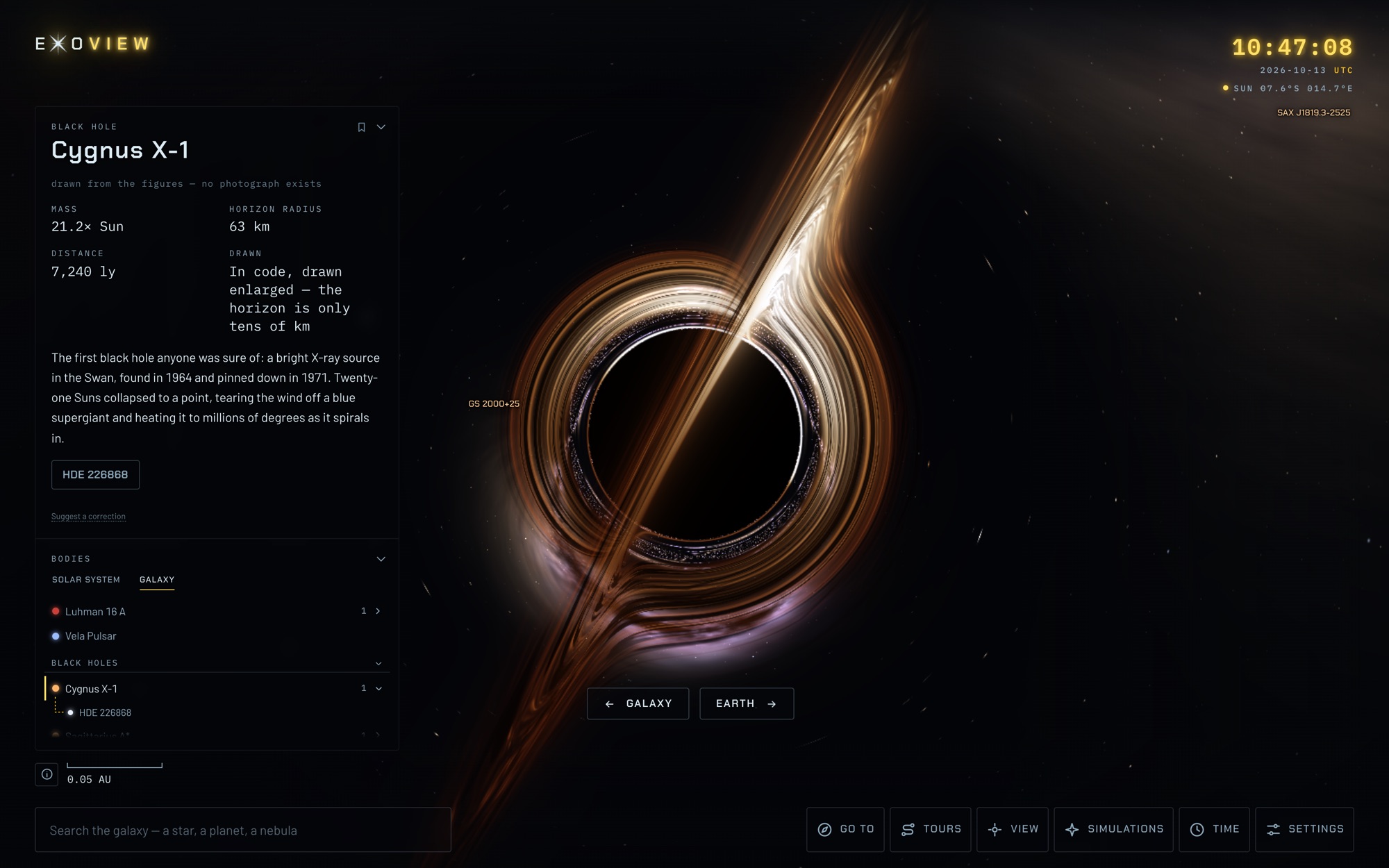
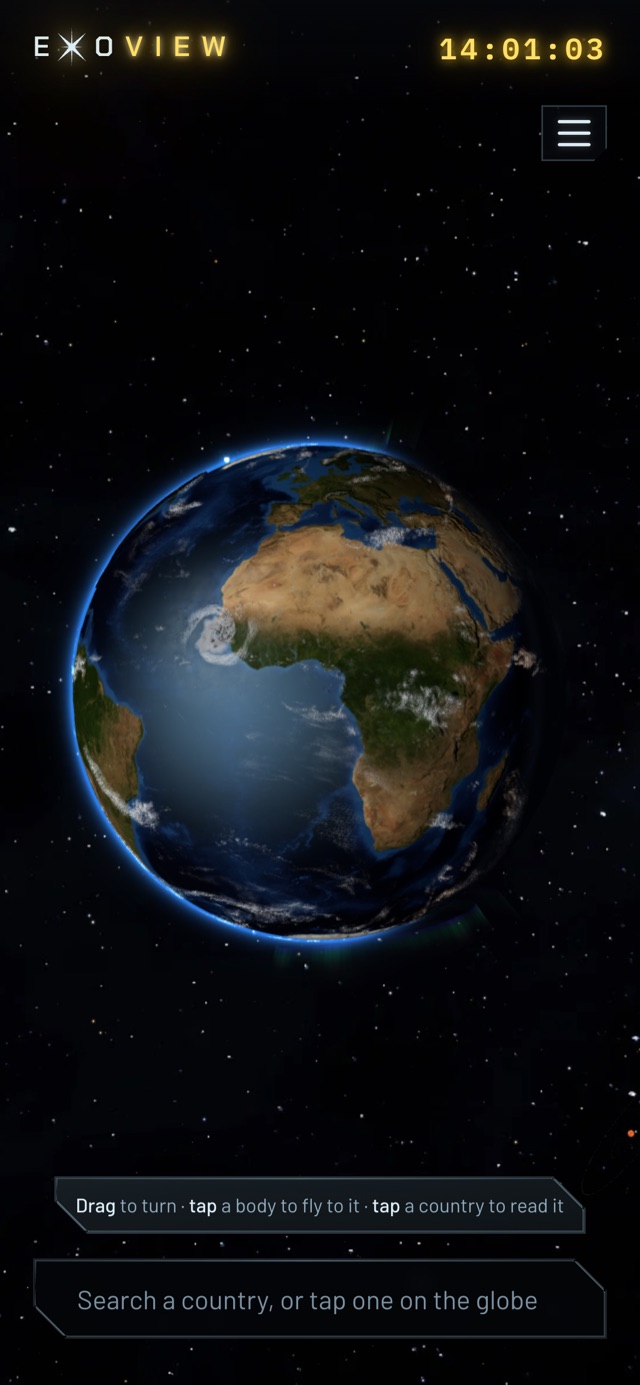
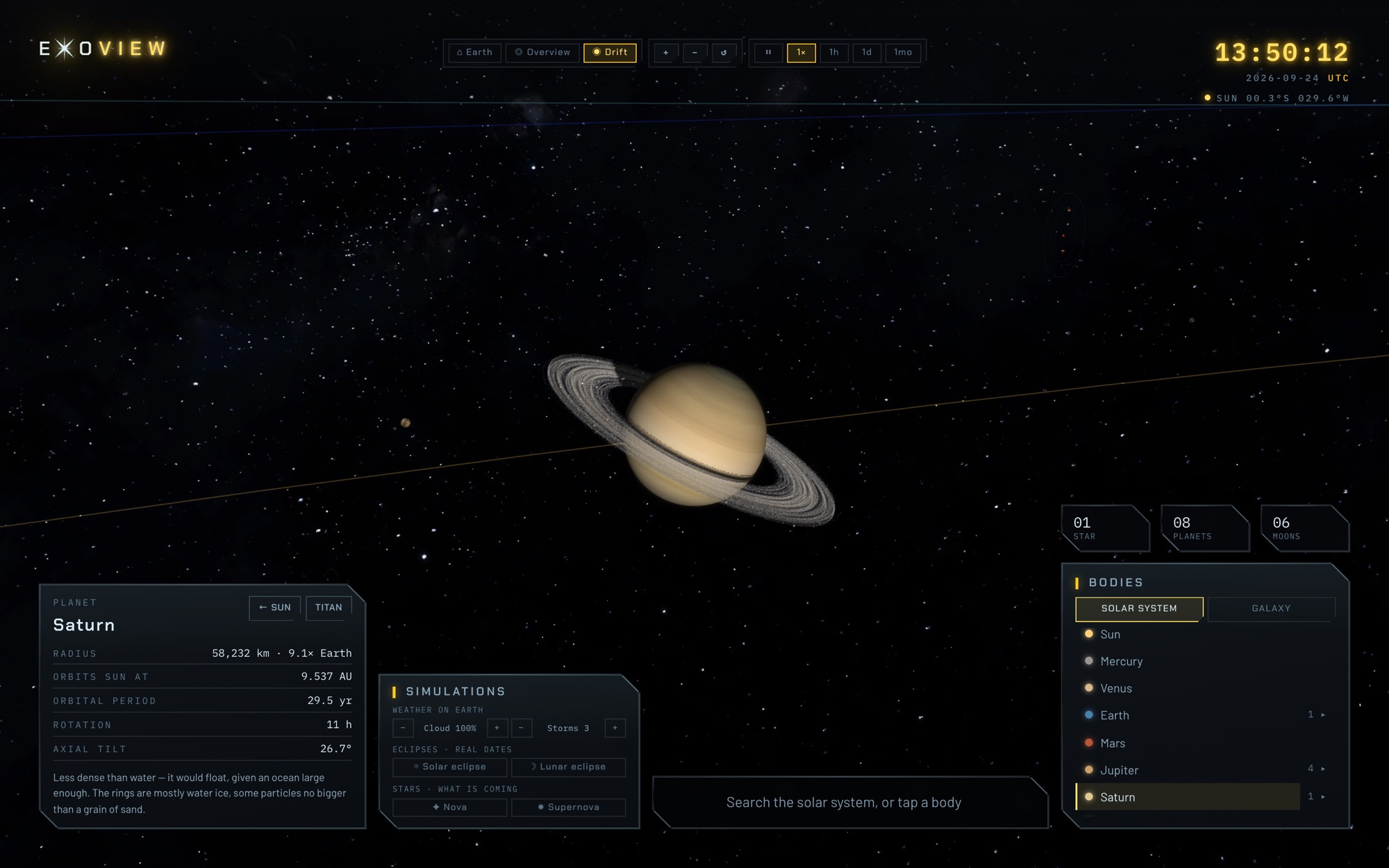
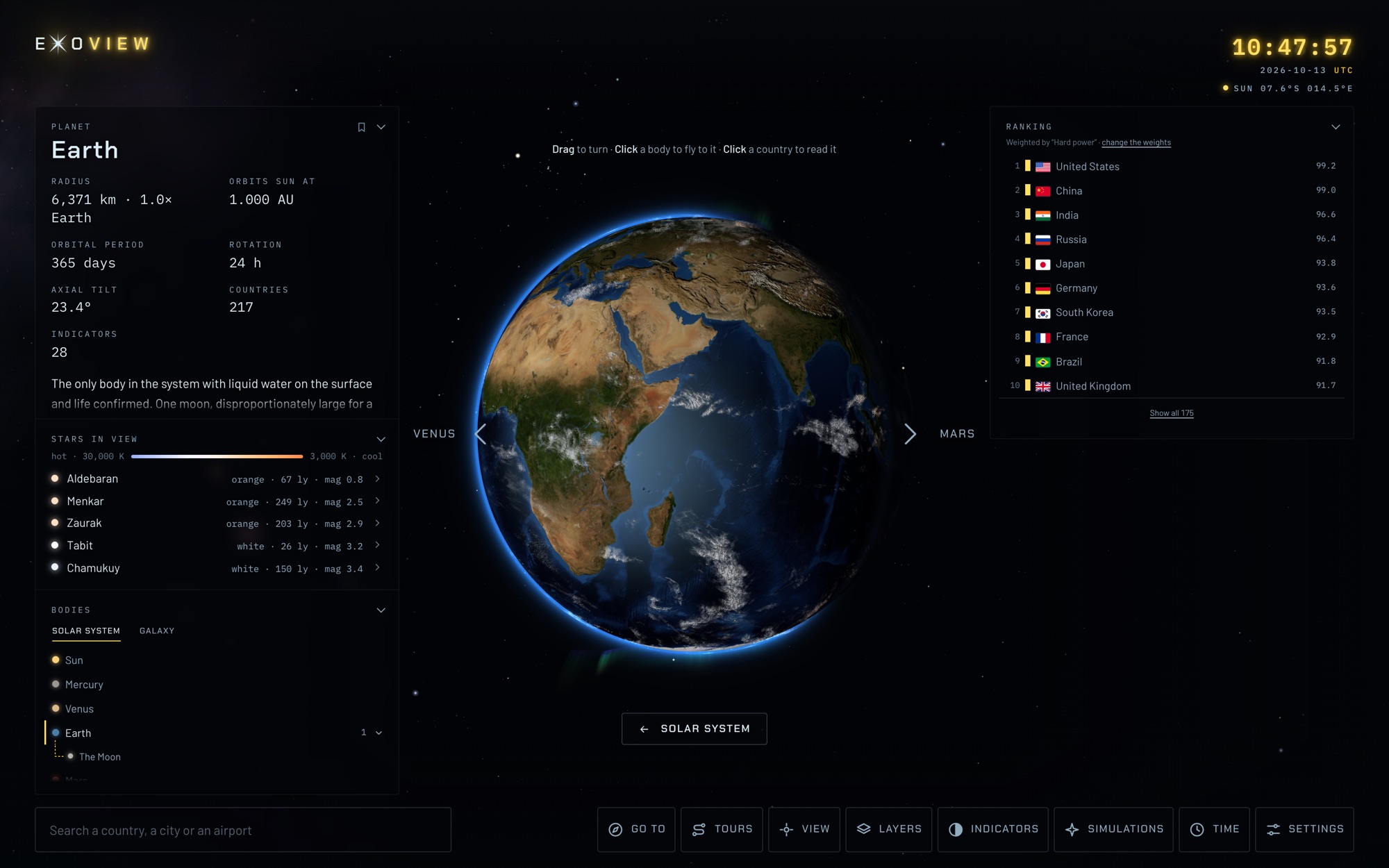
Every planet and moon sits where its orbit puts it at this instant, with real radius, orbit, rotation and tilt. Neighbours are one arrow away, and the clock can run an hour, a day or a month a second. Under the card, Stars in view lists the named stars you can actually see from where you are.
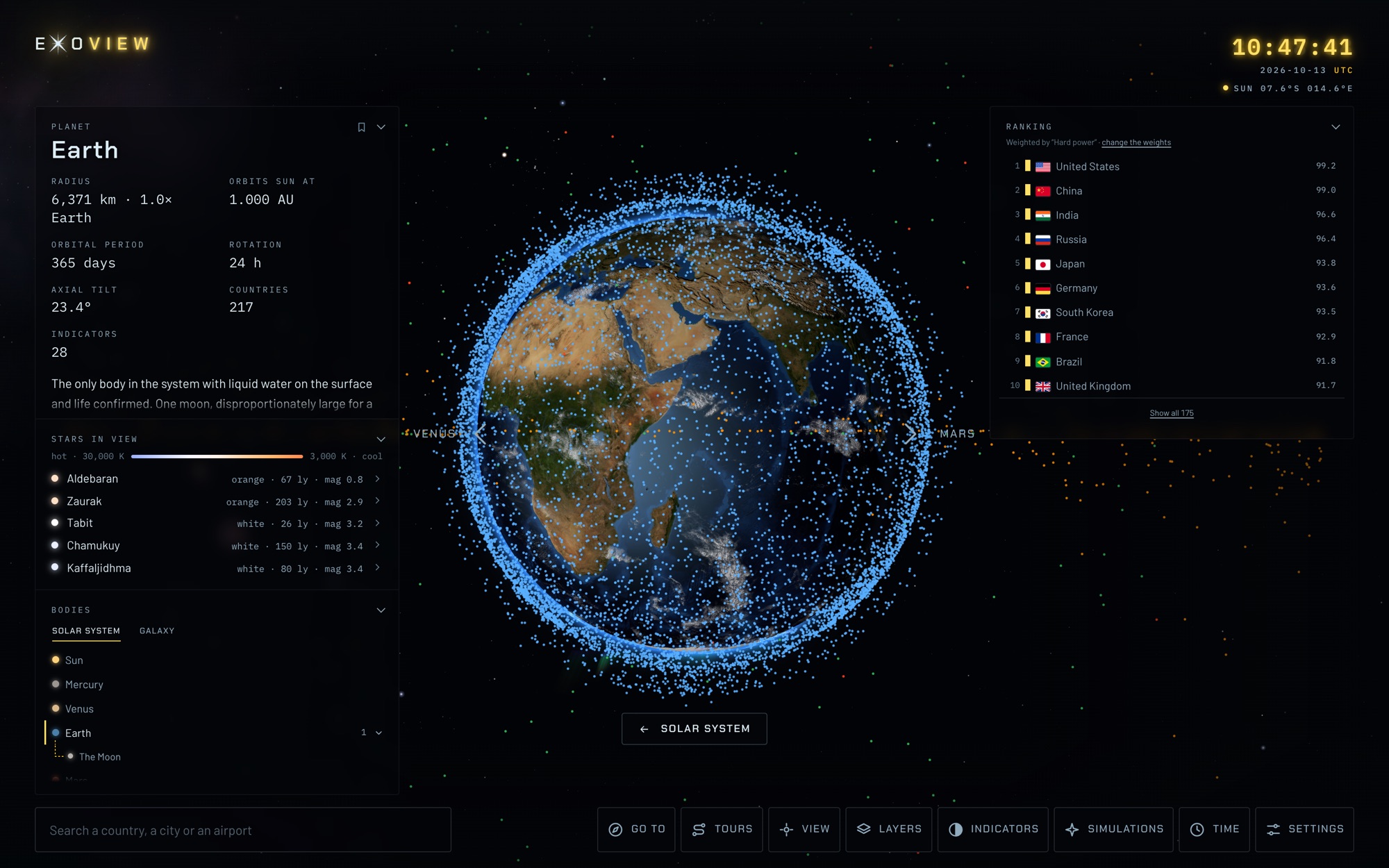
Switch on Satellites and some sixteen thousand of them circle the Earth, each where it is right now, coloured by how high it flies. Click one for its height, speed, orbit and owner, and fly in to a model of it.
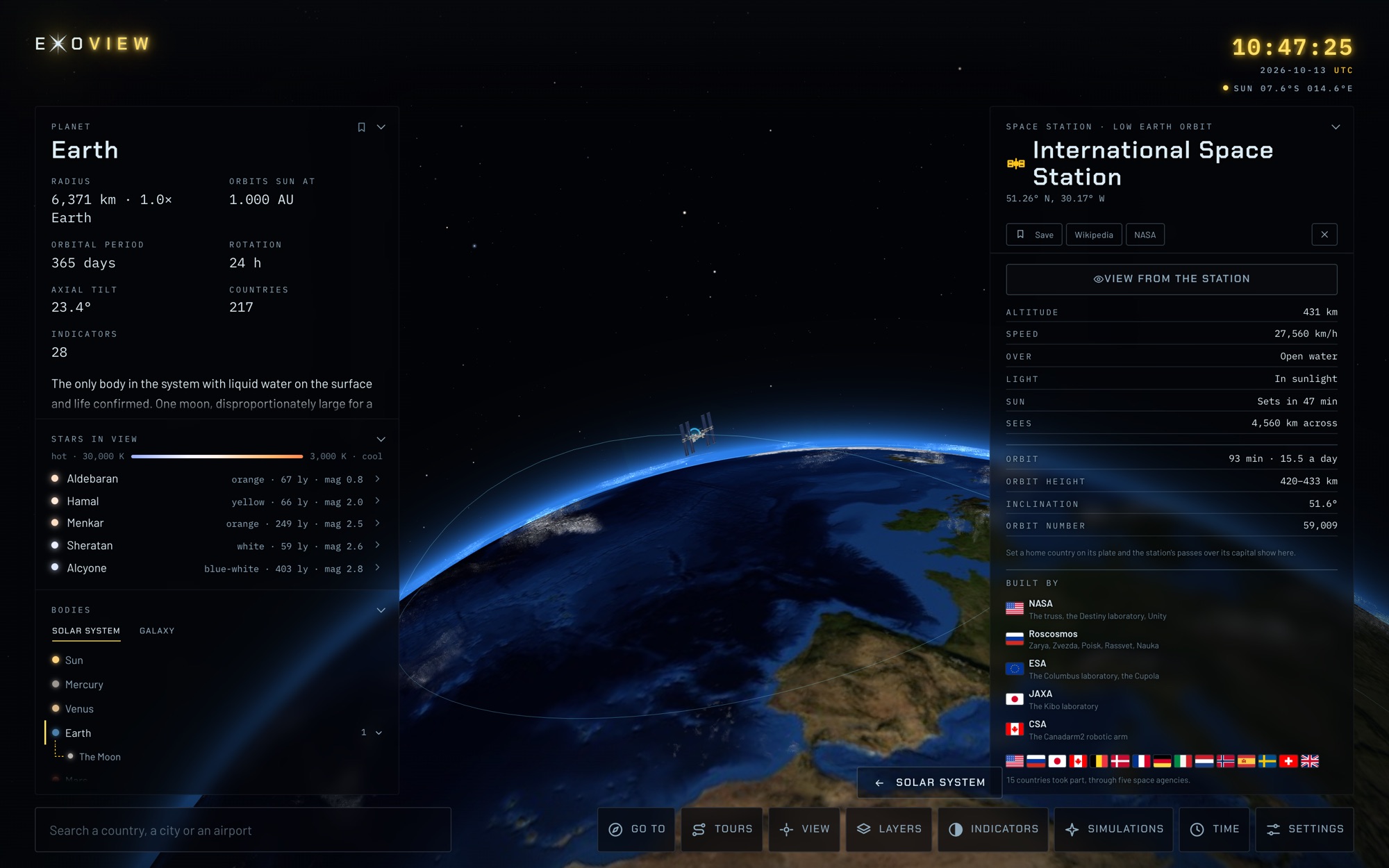
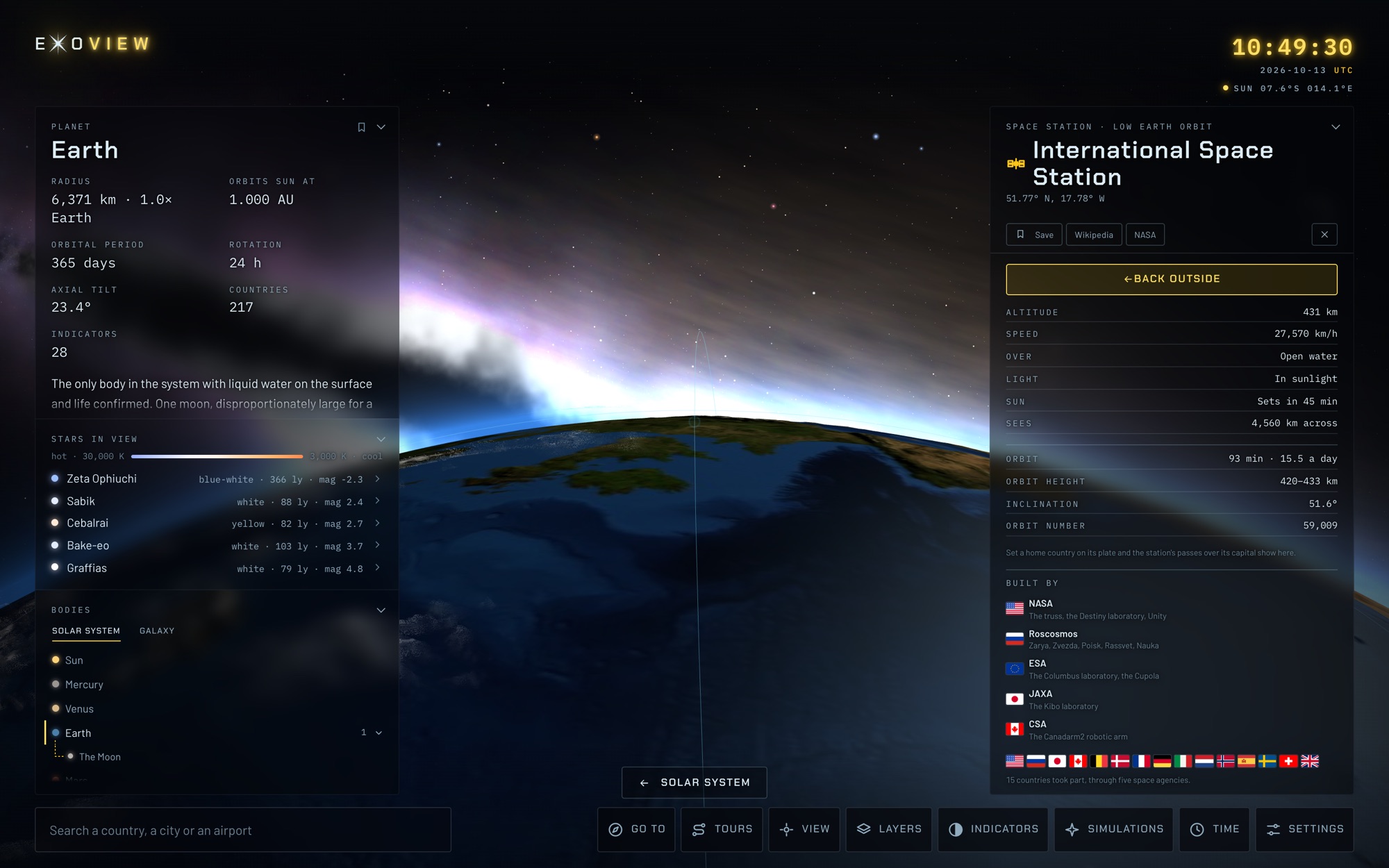
Click it on the globe and fly to a model of the station, its horizon kept level. Its plate gives height, speed, its sunrises and when it next passes over your capital - and a view from its window looks down at the Earth below.
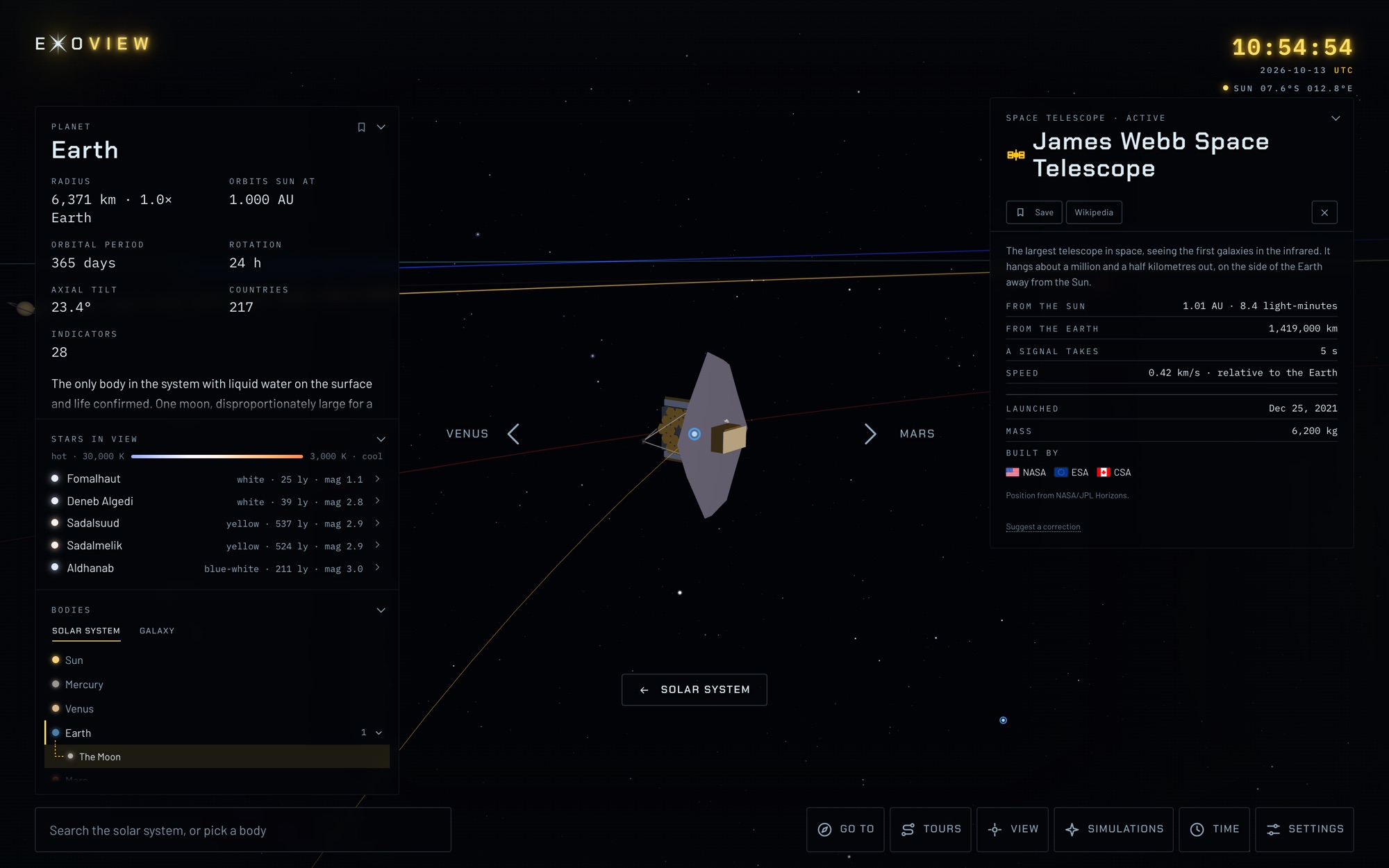
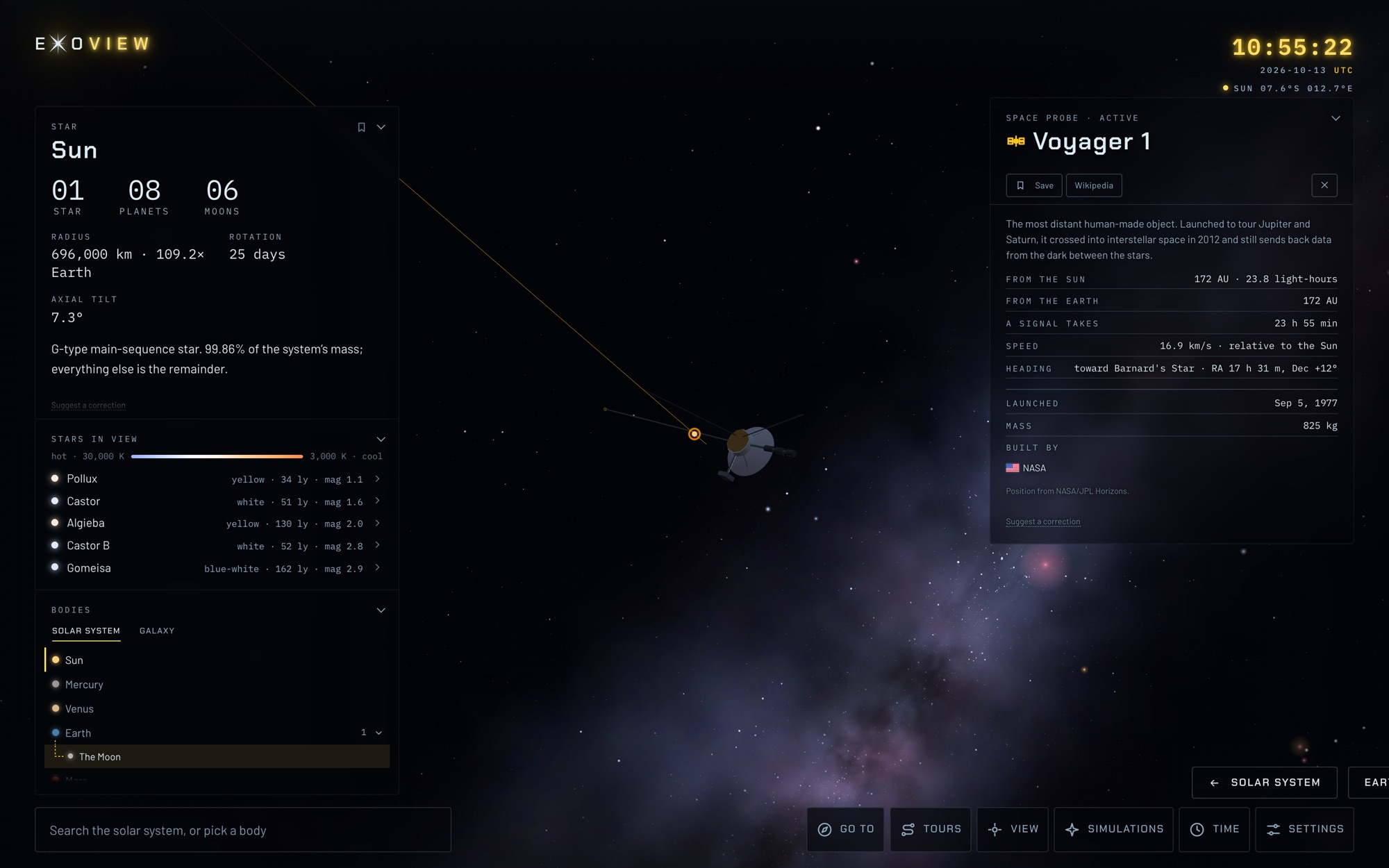
Webb, Hubble, Parker, Juno, both Voyagers and more than two dozen others, placed in the solar system for today with a trail of where each has been. Every one has a 3D model to fly round and a plate with its distance, how long its signal takes, its speed and who built it.
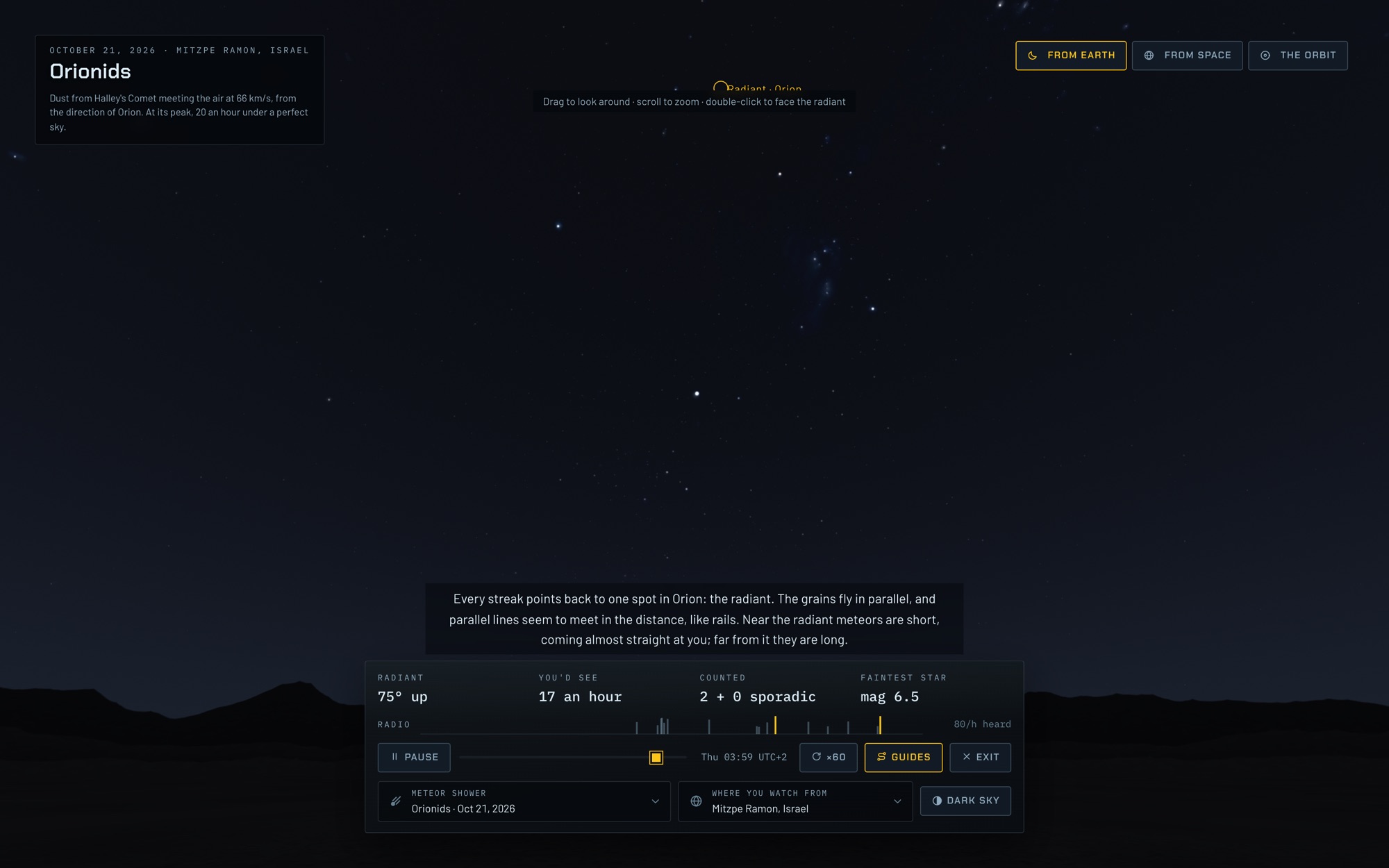
Seven showers on their real dates, watched from a place on Earth: every streak traced back to its radiant, the hourly rate, and the comet the dust came from.
Land on Earth and every country is there, coloured by the indicator you pick. Build your own weighting and the planet recolours as you drag; the ranking is a link anyone can open and see exactly.
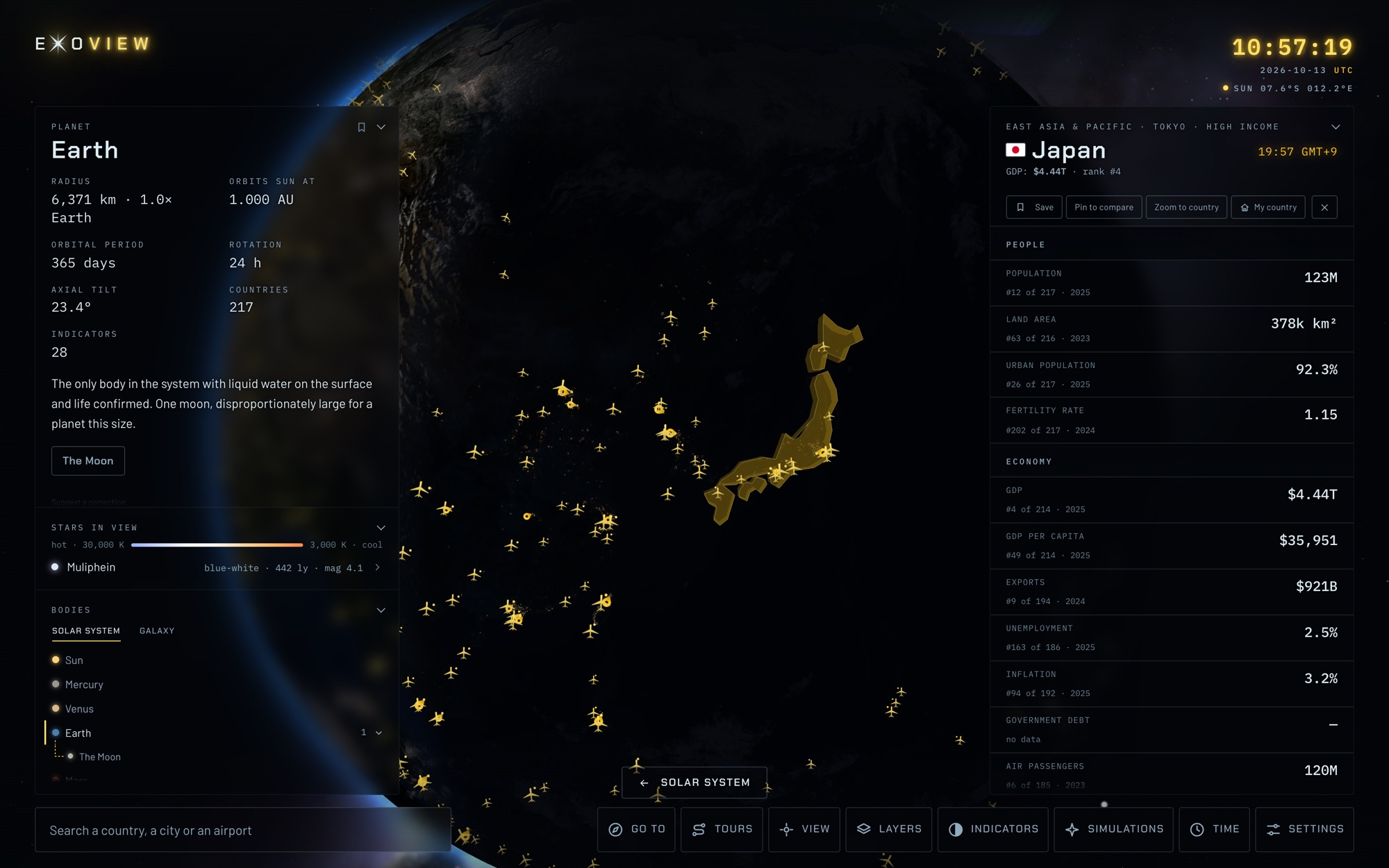
Turn on Cities and Airports and the globe fills with pins and little planes, each with its own card and photograph. Pick a country and its card gives local time, population, land and the economy - each figure with its year - with buttons to compare it or make it your own.
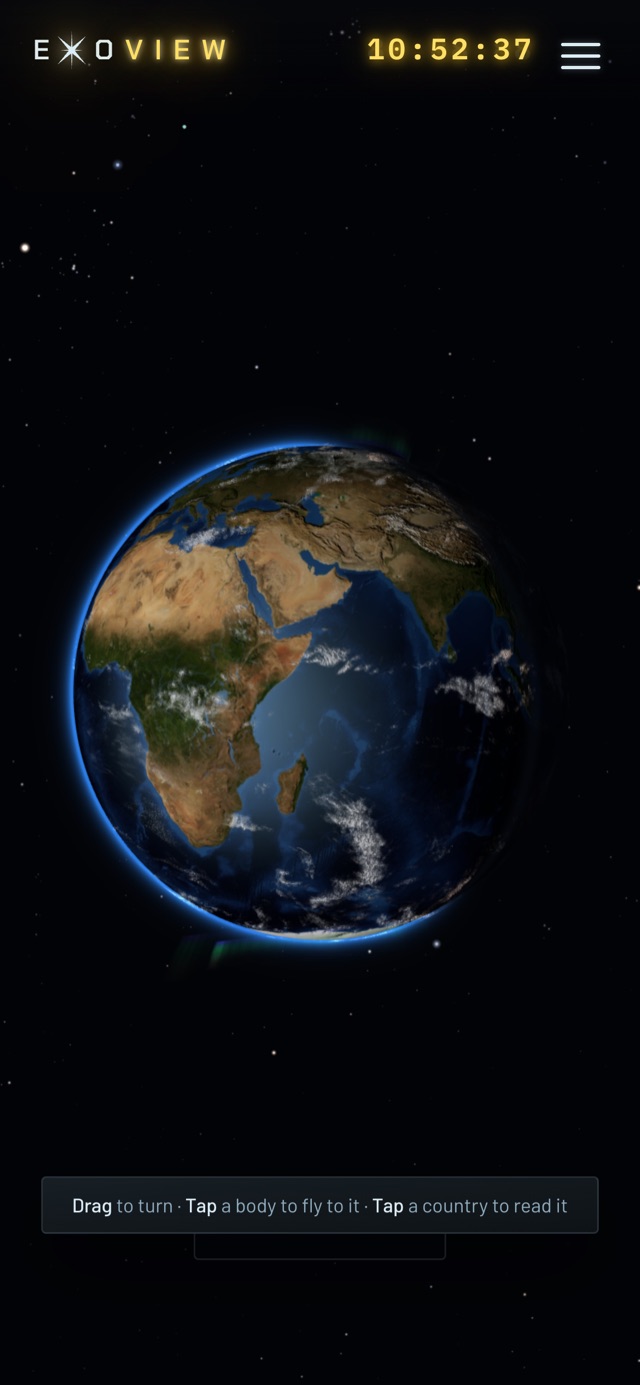
The same journey, laid out for a thumb: one bar of keys along the bottom, the facts behind a single button, and the sky keeps the screen. The 3D view holds its frame rate on phones and tablets.