All work

RabbiList

Torah video platform

A kosher video platform for Torah content - classes, lectures, shorts and melodies - alongside a live schedule of in-person classes searchable by country › city › neighbourhood, with online registration.

Role
Product · UX/UI · Full-stack
Type
Video · Community
Stack
Next.js · Prisma · SQLite
Languages
Hebrew RTL · English LTR

What it is

Torah content today is scattered between YouTube, WhatsApp groups and notices on a synagogue board. Someone looking for a class can't find out what's happening this week in their own neighbourhood, and a rabbi who wants to distribute a class depends on a platform that was never built for him.

RabbiList joins the two worlds: a kosher video library together with a live schedule of in-person classes - in one product.

The problem

  • No map - No way to know which classes run near home
  • Scattered content - Across platforms never built for this community
  • No tools for a rabbi - No page, no schedule, no registrations, no team
  • Content filtering - A real need to match content to different audiences

The solution

  • Hierarchical search - Country › city › neighbourhood
  • Four content types - Classes, lectures, shorts and melodies
  • A studio for the rabbi - Upload, schedule, registrations and page design
  • Assistant permissions - Access granted capability by capability

How it's built

Framework
Next.js
App Router
Server Actions
Data
Prisma
SQLite in development
ready for PostgreSQL
Auth
jose + bcrypt
Sessions
channel-level permissions
i18n
Bilingual
Hebrew RTL · English LTR
stable keys in the database
3user types with separate permissions
4content types
2complete languages, including layout mirroring
3levels of location search

The screens

Discovery

The central decision: the home page isn't a video feed but a local search form. “Find a Torah class in your area” - because the real need is physical, not digital. Quick jumps to Jerusalem, Bnei Brak, Beit Shemesh and Ashdod save a returning user three selections.
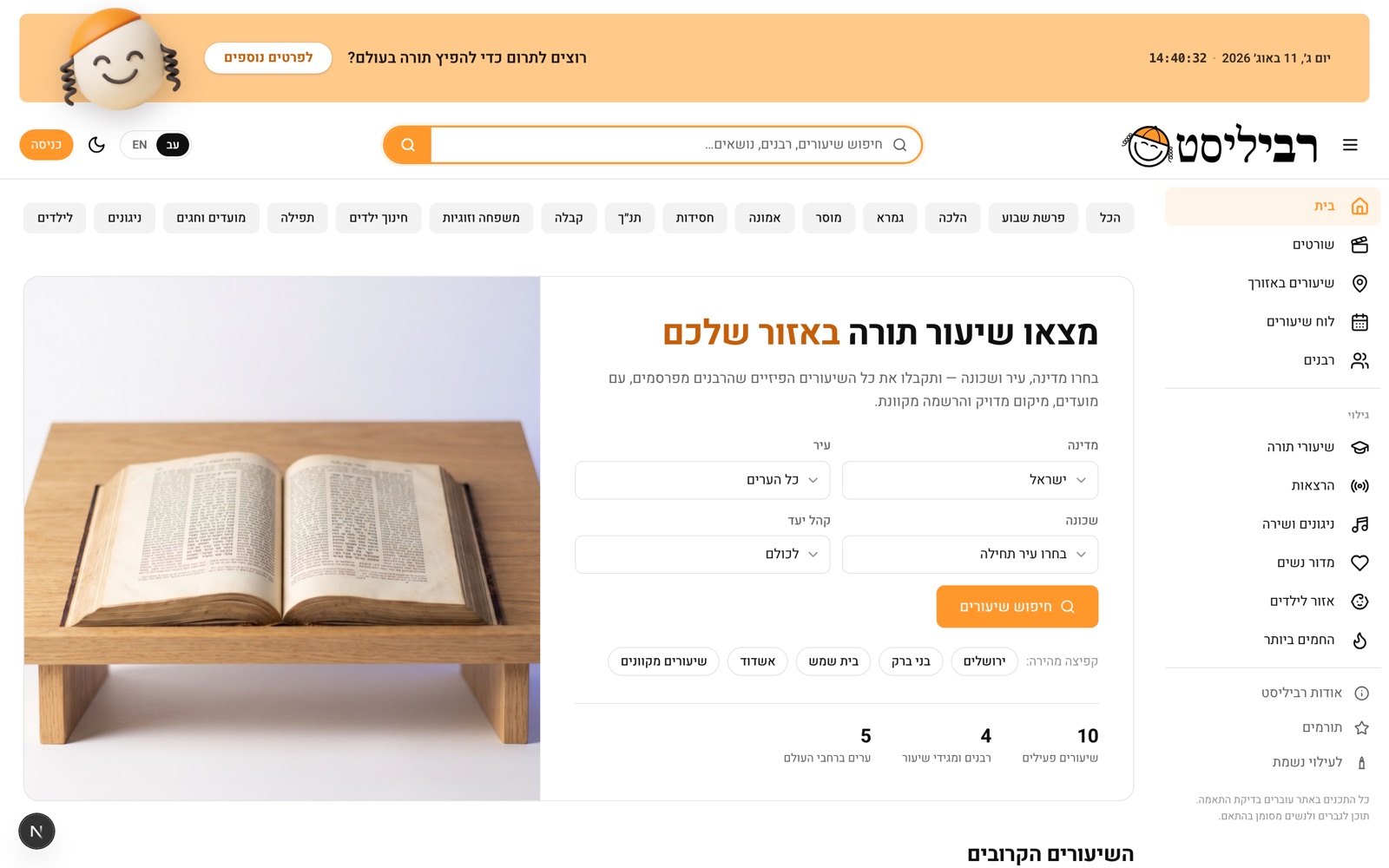
RabbiList - Discovery

The schedule - the core idea

The heart of the product and what separates it from a video platform. An in-person class is an event with a place, a time, a target audience and a registration - so it gets its own data model rather than being treated as a video. Each class carries its own accent colour, so the schedule can be scanned by rabbi or by topic.
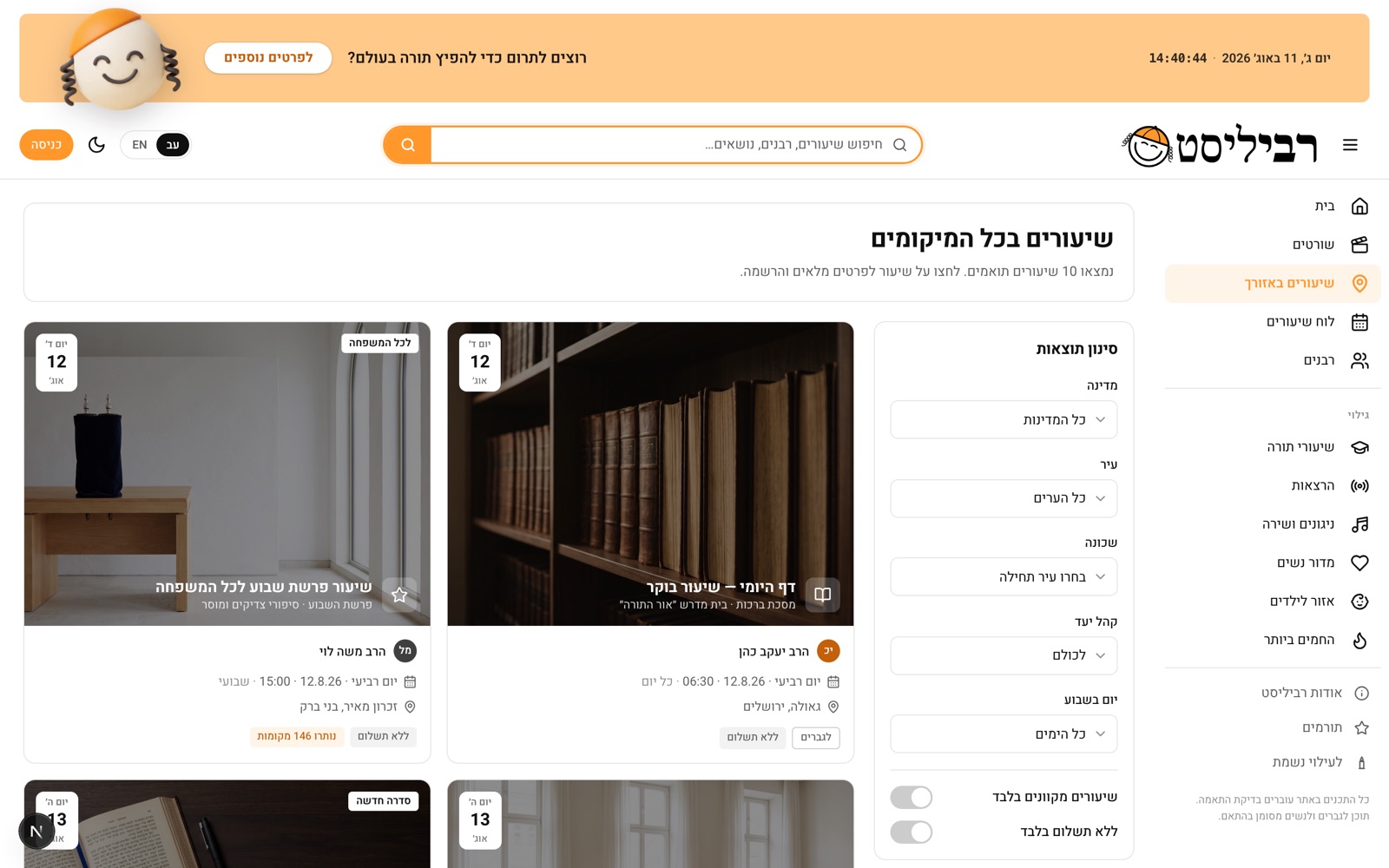
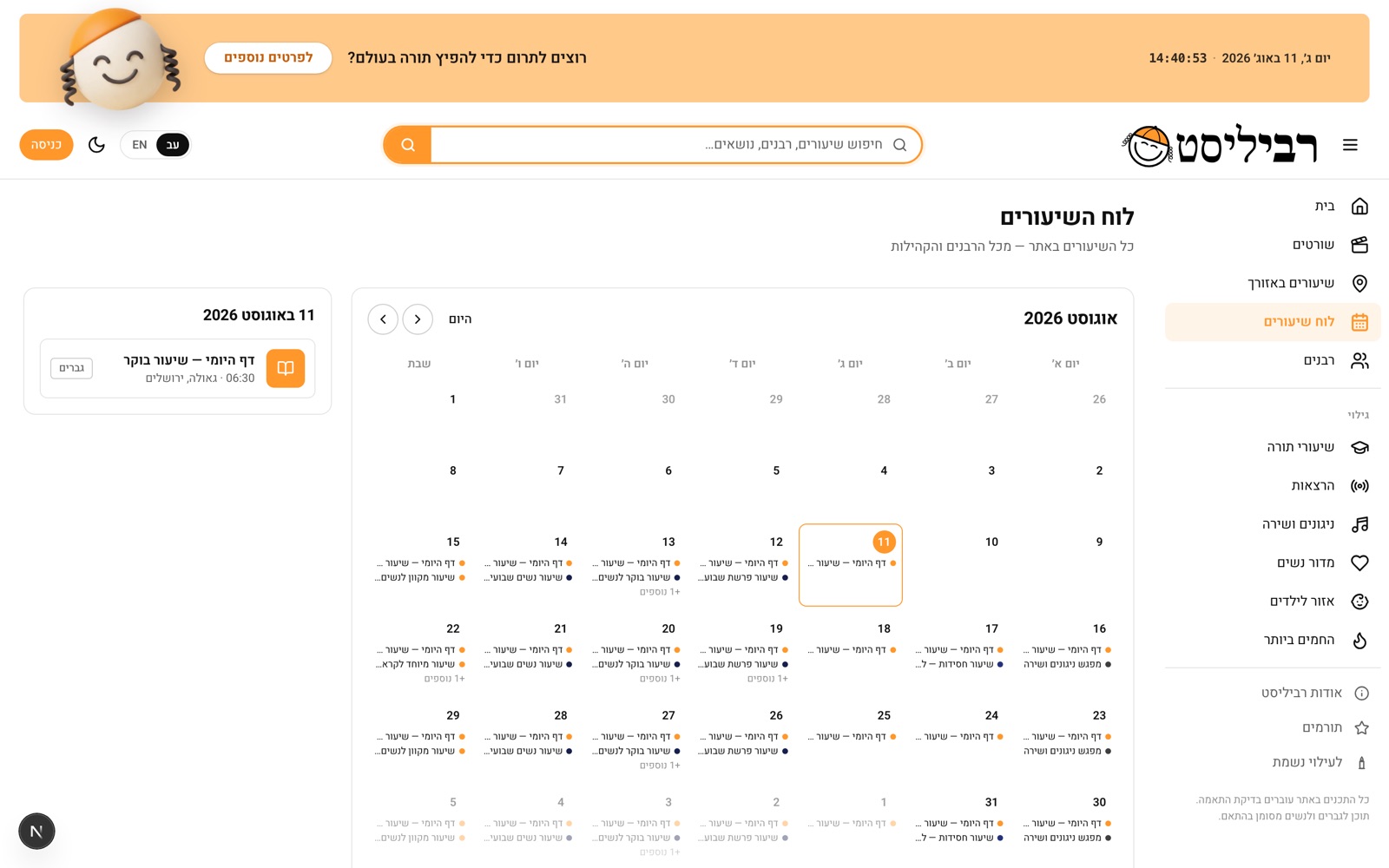
RabbiList - The schedule - the core idea

Content

Every rabbi gets a page with the sections he chooses to show - videos, shorts, melodies, schedule and about. The rabbi controls what appears, so a rabbi who teaches only Daf Yomi doesn't get a page full of empty sections.
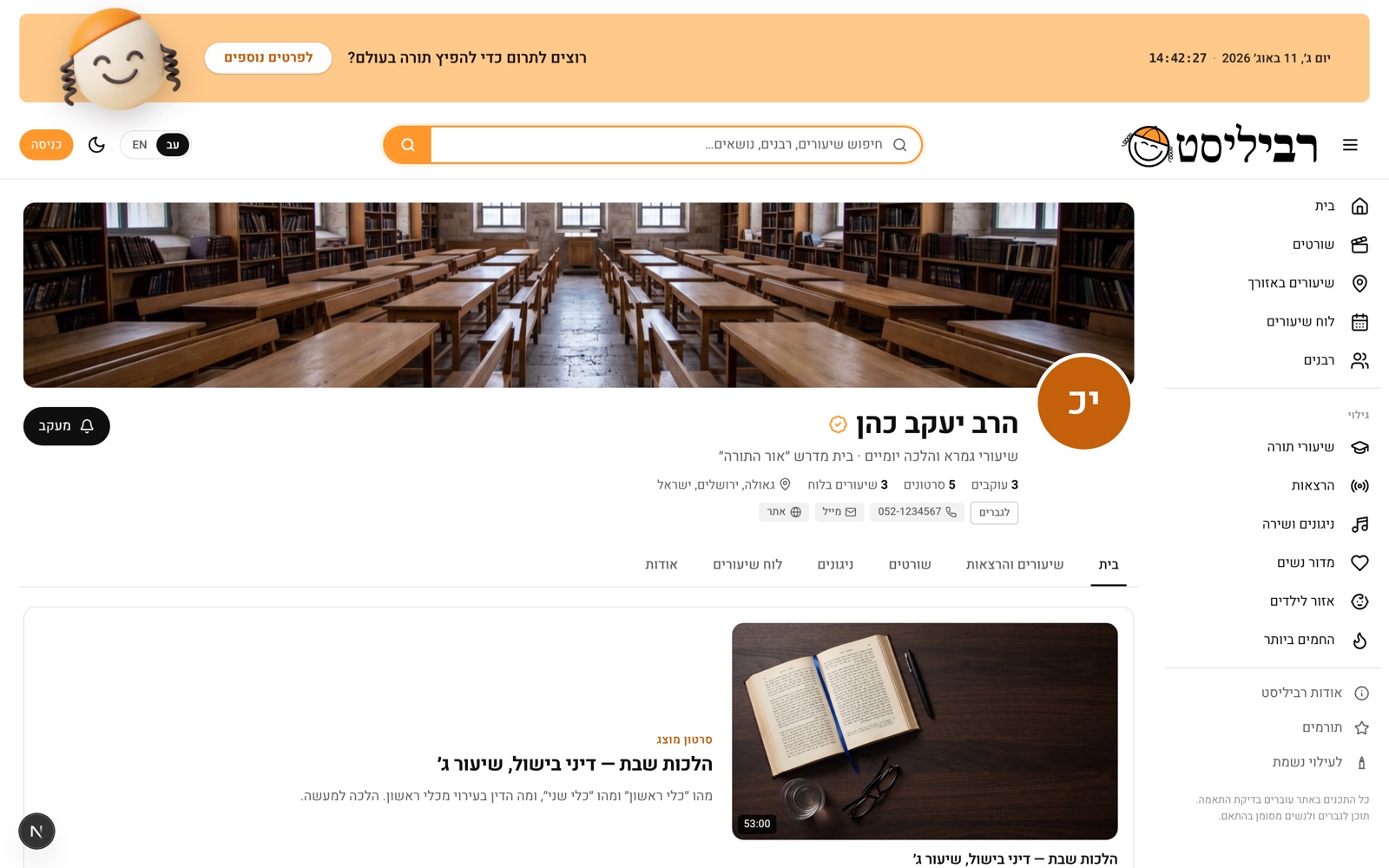
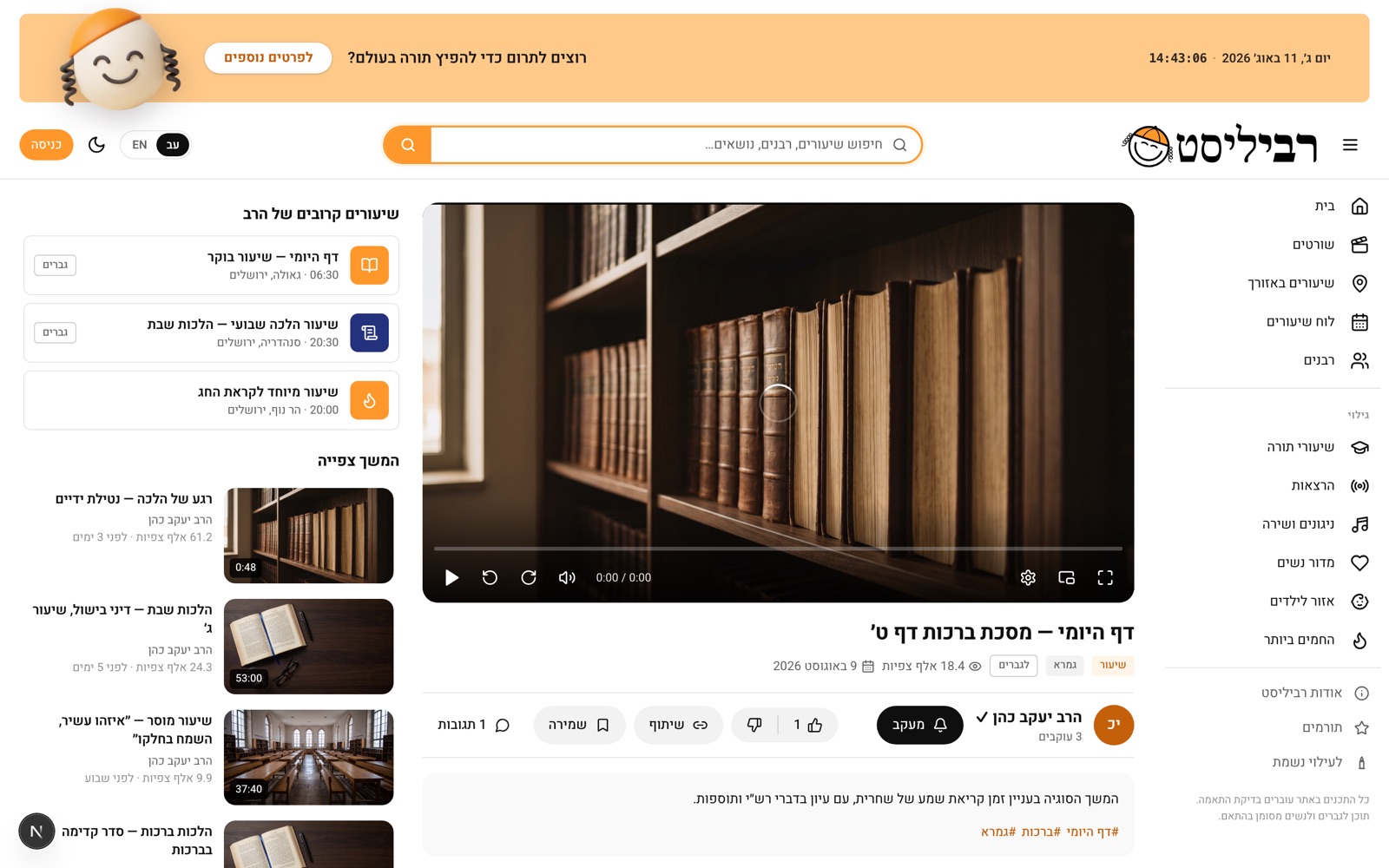
RabbiList - Content
RabbiList - Content

The studio - the rabbi's side

The second product inside the product. The overview shows six metrics in one row, and beside them the two things a rabbi actually does every week - recent videos and upcoming classes. The primary buttons - upload a video, new class, page design - stay fixed at the top of every studio screen.
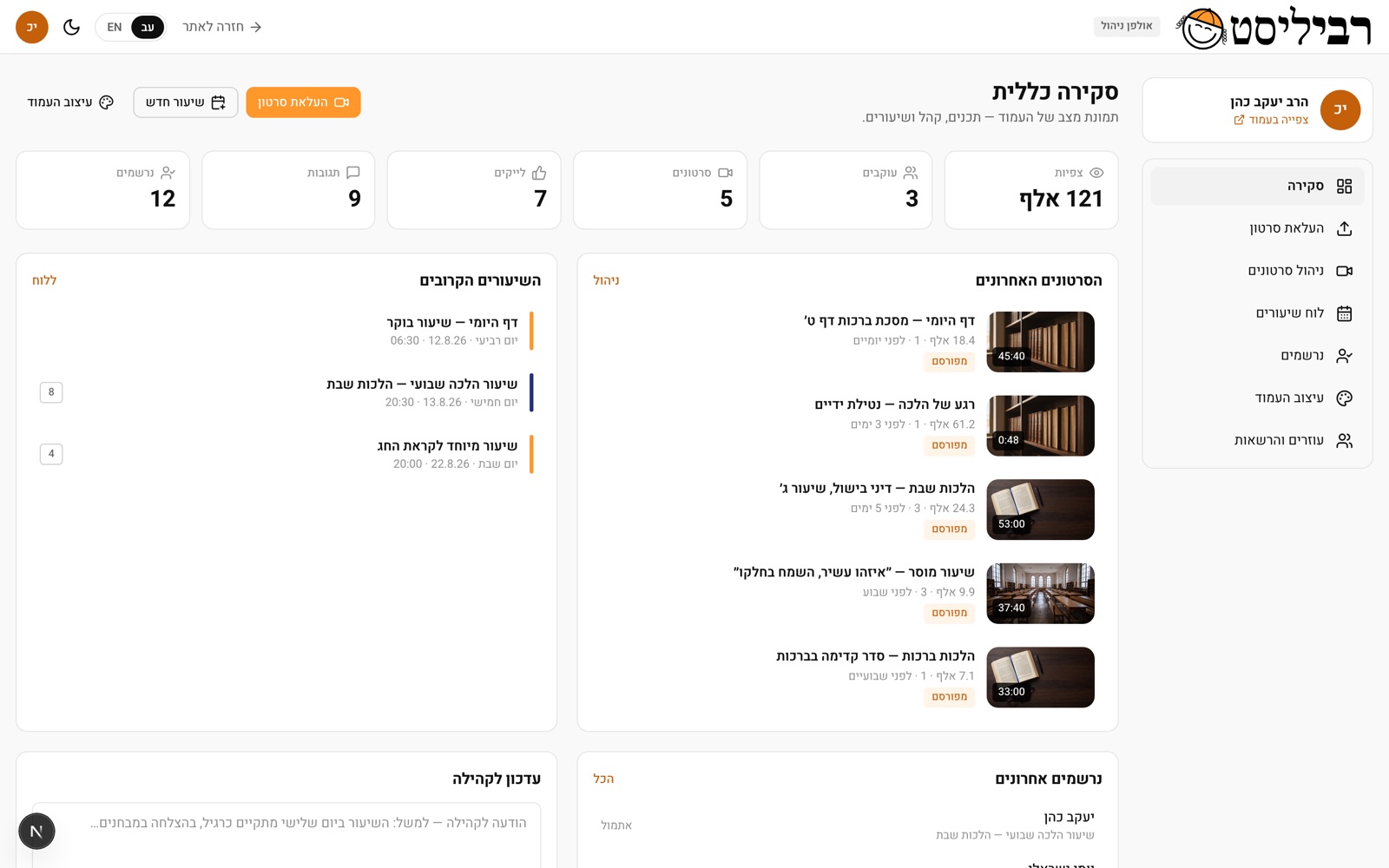
RabbiList - The studio - the rabbi's side

Control

The page editor shows a live preview while editing - the rabbi sees exactly what a visitor will see, without saving and checking. Registrations aren't a static list but a working tool: who registered, for which class, and when.
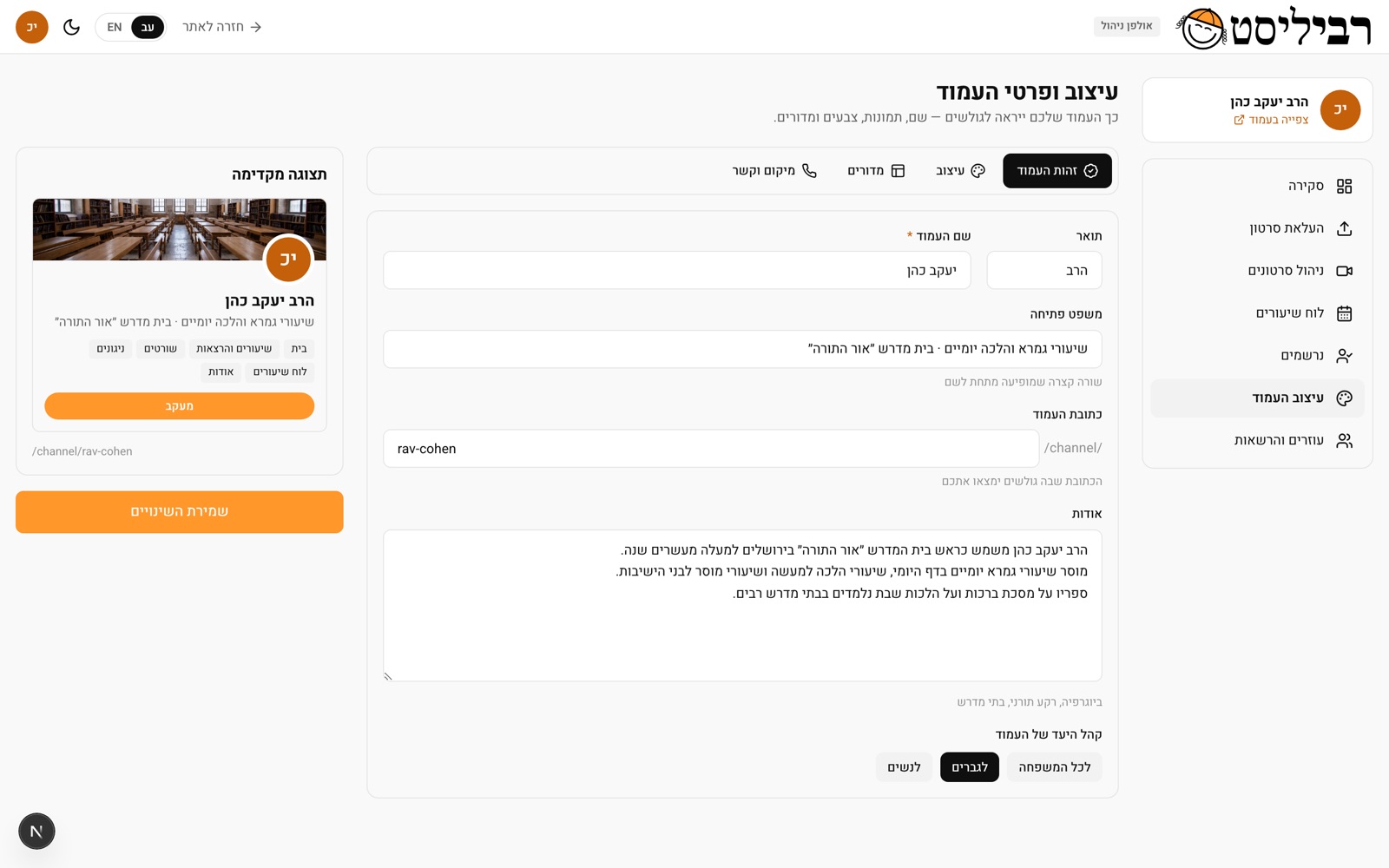
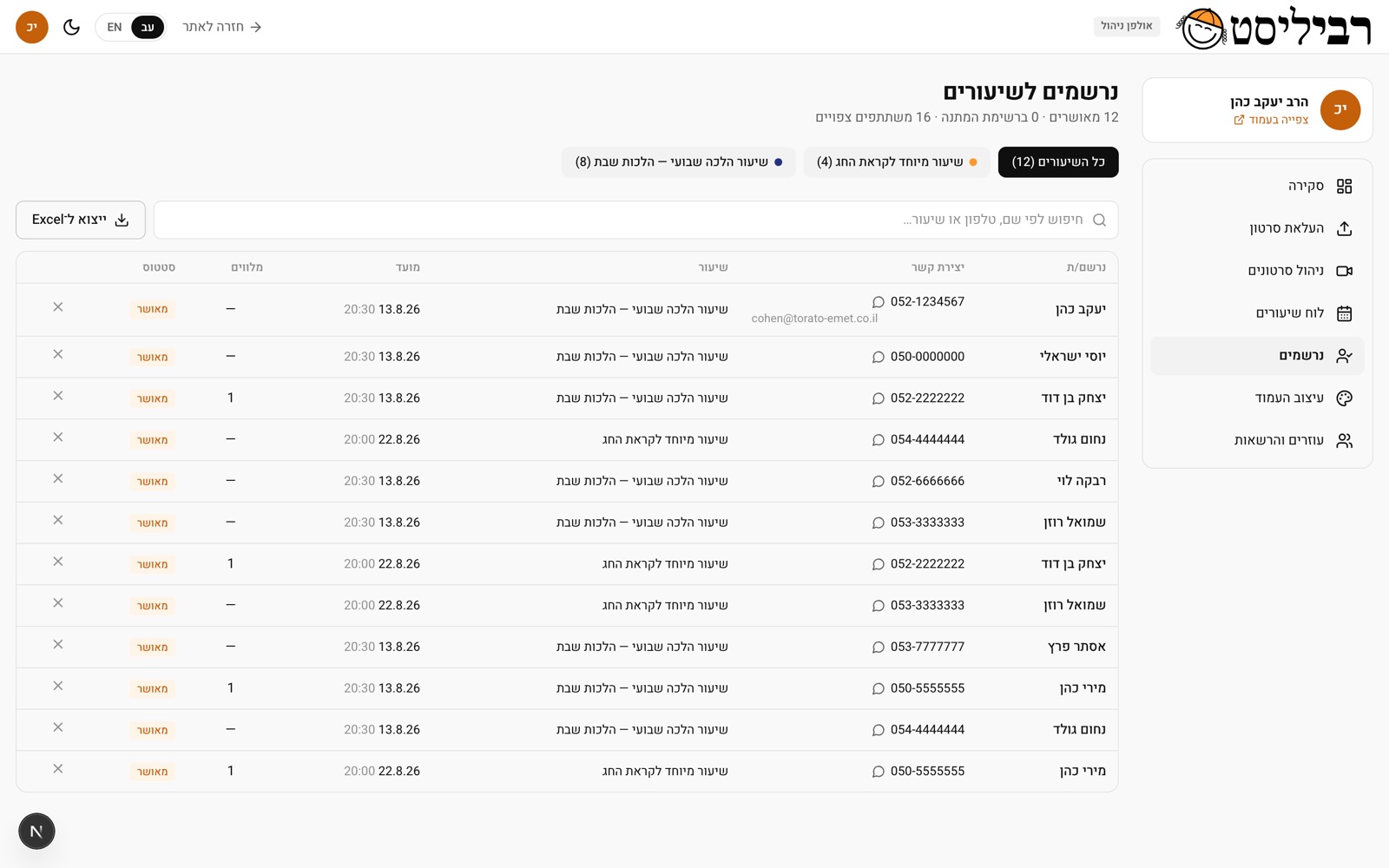
RabbiList - Control
RabbiList - Control

Design decisions

01

  • Location before content - The home page asks “where are you?” rather than “what do you feel like watching?”. That's what turns the product from a video library into a community service.

02

  • An event is not a video - An in-person class got its own data model with place, recurrence and registration. Forcing it into a video entity would have broken the product.

03

  • Stable keys, translated display - Cities and categories are stored as fixed keys and translated in the interface - so a search by city returns identical results in Hebrew and English.

04

  • Permissions per capability - An assistant isn't a “sub-admin”. The rabbi grants capability by capability: upload, edit, schedule, registrations, design. That's what lets a real rabbi delegate without worry.

05

  • A two-colour palette - Brand orange and black only, no gradients or decorative colour. The restraint is what produces the sense of respect the content demands.

06

  • The logo as a single asset - The logo loads from SVG as one path rather than an assembly of mark and text - so it's identical in Hebrew and English, down to the stroke weight.
Next project
OnZero →
Get in touch